

Automotive Assembly Applications
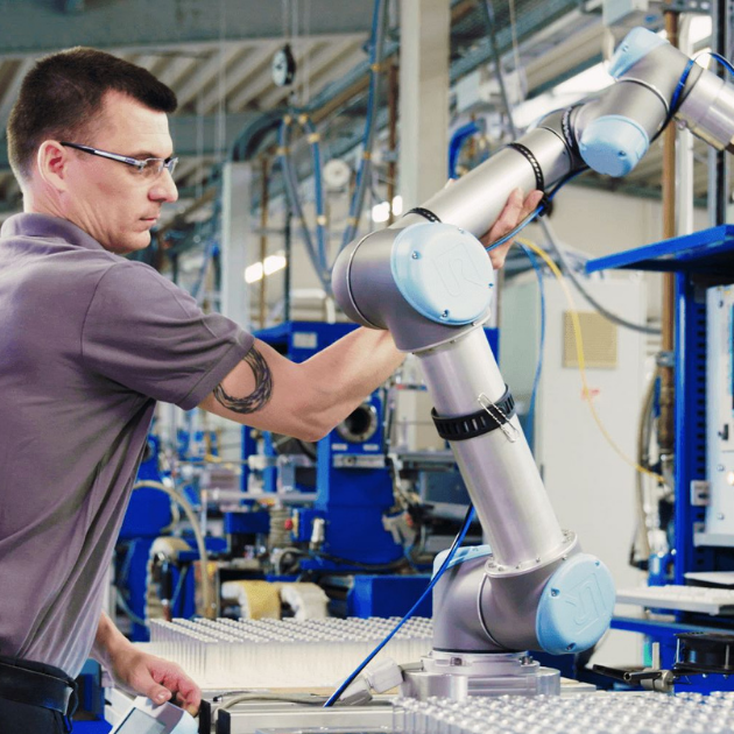
Advantages of Automated Automotive Assembly with Teradyne Robotics
Automotive assembly is a sequential, station‑based process where small variation can impact takt time and quality. Frequent changeovers, tight tolerances, and repetitive tasks make it difficult to sustain consistent performance across shifts and vehicle variants.
Universal Robots collaborative robots support repeatable motion, controlled force, and consistent positioning in automotive assembly operations helping OEMs and Tier suppliers reduce variability and maintain stable production flow.
In automotive assembly, every station is engineered to meet takt time and process capability requirements. When processes rely on manual execution, results can vary across operators, shifts, and mixed‑model production.
Collaborative robots and autonomous mobile robots standardize assembly tasks by automating labor-intensive activities, from machine tending to transporting scrap away from assembly lines. Teradyne Robotics delivers consistent quality and predictable throughput across automotive production environments.
Key outcomes include:
- Reduced process variability across shifts and operators
- Repeatable positioning and motion for tight‑tolerance assembly tasks
- Faster changeovers for mixed‑model production
- Reduced ergonomic strain for repetitive assembly work
- Collaborative operation without extensive guarding
Proven robotic applications used daily across automotive manufacturing operations.
Example applications where Universal Robots and MiR are deployed today, validated by real customers, at real production speeds.
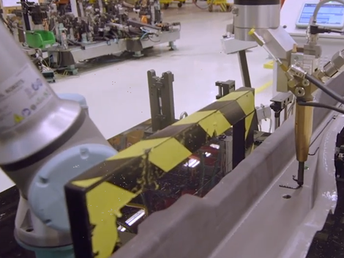
Automotive Adhesive & Gluing
Robotic application of adhesives and sealants for consistent bonding in automotive assembly processes.
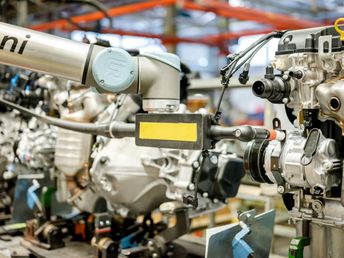
Automotive Camshaft Assembly
Robotic assembly of engines and transmissions, supporting high‑precision fastening and repeatable powertrain production.
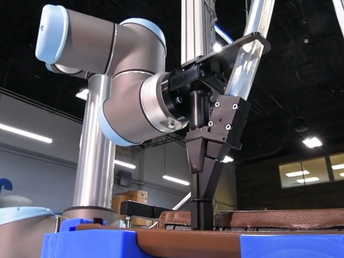
Automotive Clip Insertion
Automated clip insertion for interior and exterior assemblies, improving consistency and reducing part damage.
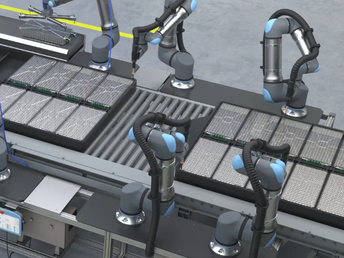
Automotive EV Battery Assembly
Robotic handling and assembly processes supporting safe, precise electric vehicle battery production.
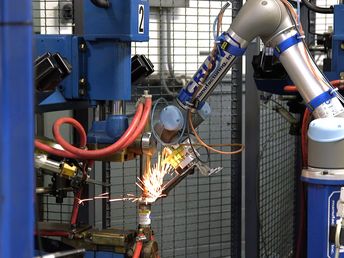
Automotive Frame Welding
Supporting frame welding cells through automated part handling, positioning, and tending
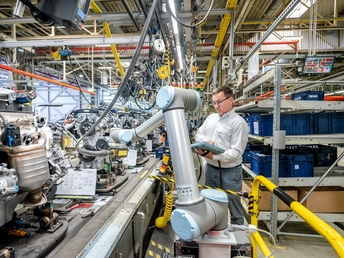
Automotive Nut Running
Screwdriving and nut running are often deployed on the same stations or adjacent stations and are evaluated together as fastening strategies.
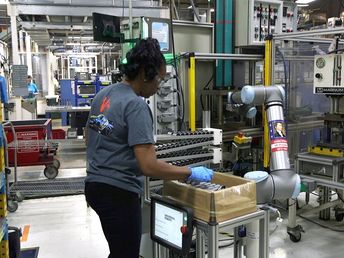
Automotive Press‑Fit Assembly
Robotic press‑fit operations for controlled insertion of bearings, bushings, and precision components.
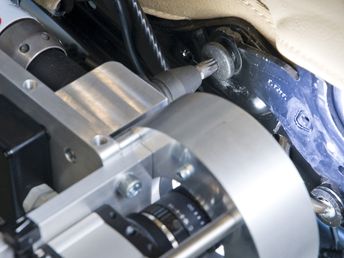
Automotive Screwdriving
Automated screwdriving for automotive assembly lines, delivering consistent torque, quality, and cycle times.
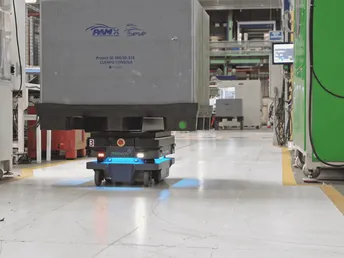
Automotive Waste Removal
Autonomous removal of scrap and waste materials to support clean, uninterrupted automotive production flows.
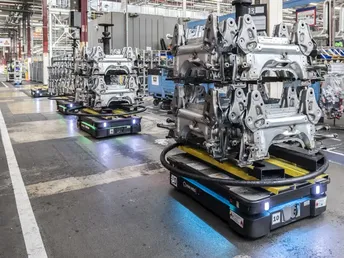
Intralogistics for Parts Transportation
Enhancing Intralogistics in the Automotive Industry with Mobile Industrial Robots AMRs
Automotive Assembly Line Case Studies
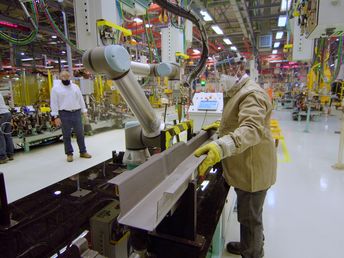
Mercedes-Benz
“The robot now delivers the perfect quality demanded by Mercedes-Benz, and we can also take advantage of the workforce to further enhance the product.”
Rogério Dutra, Mercedes-Benz
Valeo
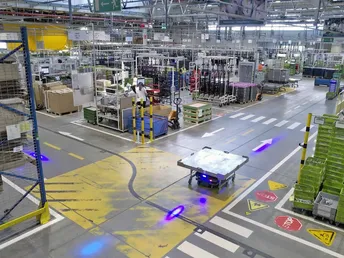
"Robotization of intralogistics at the Wiper Plant in Skawina has significantly improved the efficiency of our processes. We estimate that the payback time on the investment is about 12 months".
Dominik Wąsiel, Valeo

Stellantis
“For us, UR tech is a guarantee of a particularly advanced man-machine interface perfectly matched with the group's quality requirements in terms of production processes and products.”
Ennio Meccia, Stellantis

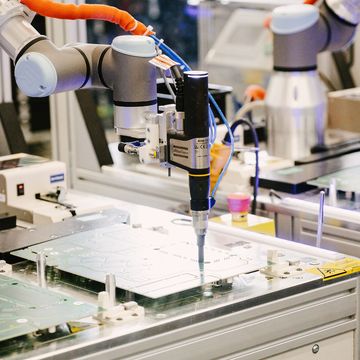
Selecting the right robot for automotive assembly
Automotive assembly applications require consistent motion, controlled force, and reliable repeatability across sequential stations. Universal Robots collaborative robots are used in automotive assembly environments where flexibility, reach, and payload must align with takt‑time requirements and mixed‑model production needs.
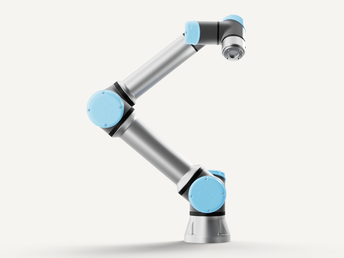
UR7e-920
- Payload
- 7.5 kg
- Reach
- 920 mm
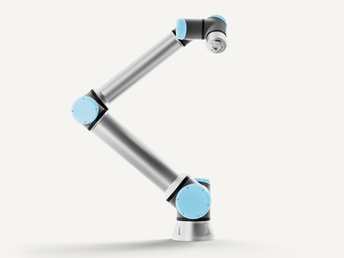
UR12e-1300
- Payload
- 12.5 kg
- Reach
- 1300 mm
New
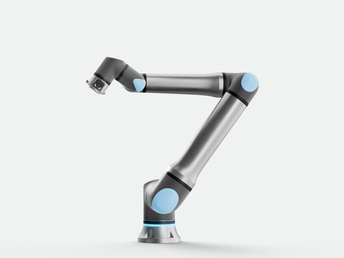
UR17g-1300
- Payload
- 15 kg
- Reach
- 1300 mm
- Extended payload
- 17.5 kg
Explore next steps in automotive applications
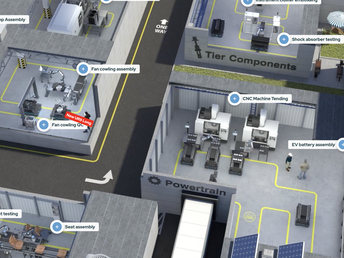
See It Before You Deploy It
Explore a virtual automotive factory and see how collaborative robots and mobile robots work together across real production workflows, from material delivery to repeatable assembly tasks.
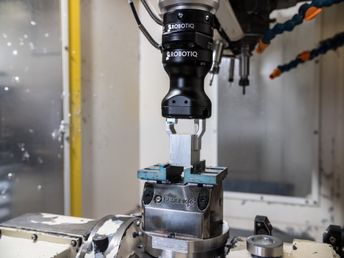
Explore our solution kits
Review real automotive use cases and solution kits designed around common production challenges, including assembly, material handling, and quality‑critical tasks.
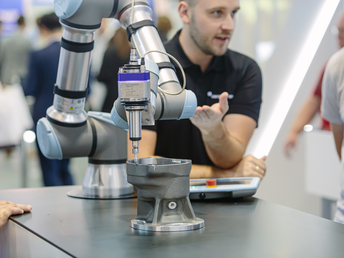
Talk to an automotive automation expert
Discuss your production challenges and identify where robotics can deliver the fastest impact.
Talk to an automotive automation expert
An automotive automation specialist will follow up to discuss your application and production requirements. The goal is to understand your setup and explore practical automation options, no commitment required.
