Automotive Frame Welding​

Heavy parts, tight tolerances, awkward reaches, and long shifts make frame welding in automotive one of the most demanding areas on the line.
-

Advantages of Automotive Frame Welding Automation with Teradyne Robotics

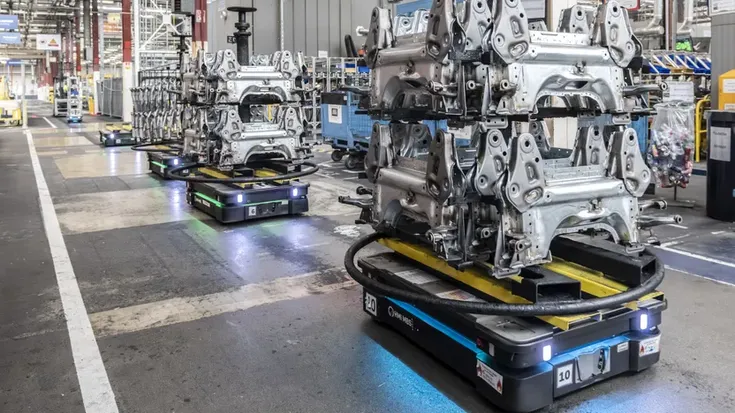
Manual handling around automotive frame welding cells often limits takt time and introduces variability across shifts, operators, and model variants. Heavy components, tight tolerances, and awkward reaches make consistent part loading and repositioning difficult to sustain at scale.

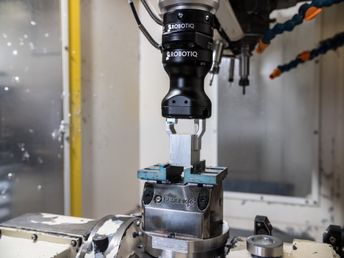
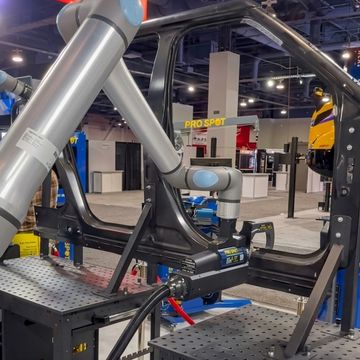
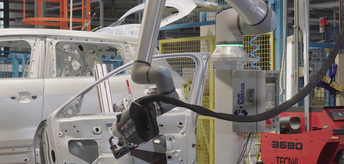
UR cobots deliver controlled, repeatable motion for part handling and weld‑cell tending, ensuring consistent positioning and flow into and out of the cell—without disrupting established welding processes or increasing operator risk.

Manual handling in and around frame welding cells is repetitive and physically demanding. In environments where access is limited and cycle times are tight, variability in part presentation and repositioning can quickly impact throughput and overall cell performance.

Collaborative robots integrated alongside existing welding equipment allow manufacturers to control positioning, motion, and handoff consistency at critical points in the process. This supports stable, repeatable weld‑cell operation while maintaining flexibility for model and fixture changes.

Key outcomes include:

  • Consistent part loading, unloading, and repositioning at the weld cell
  • Improved weld‑cell uptime through stable part presentation
  • Faster changeovers to support mixed‑model production
  • Reduced ergonomic strain for operators
  • Collaborative operation without heavy guarding

Improving automotive frame building efficiency with UR cobots

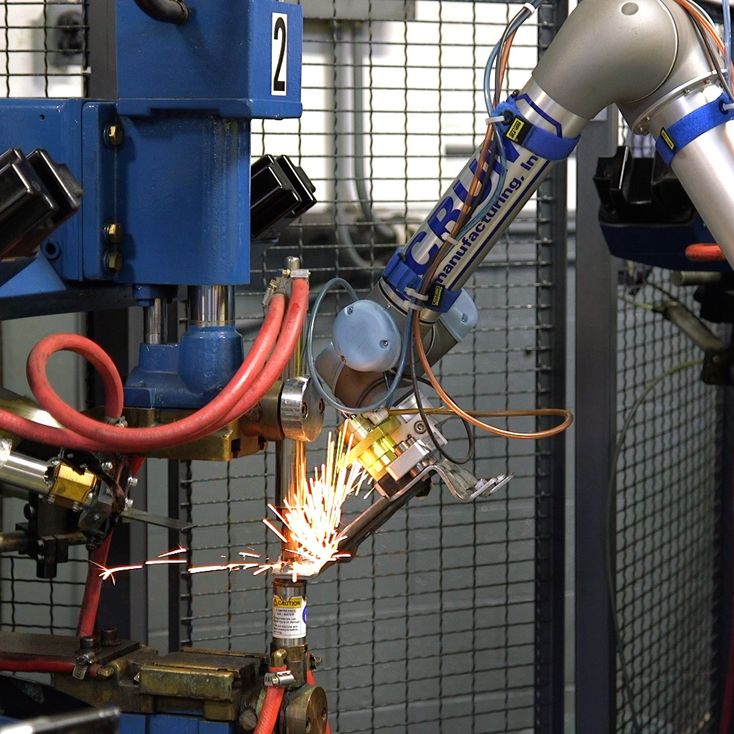
T&W Stamping in Ohio automated one of its most labor‑intensive operations: resistive welder tending.

Despite challenges from electro‑magnetic pulses that interfere with robot servos, the company deployed a UR5 cobot that paid for itself in under four months, boosting efficiency by 40% and freeing up three operator functions.

In most automotive plants, welding robots are already in place. The bottleneck is not the weld—it is getting heavy and awkward parts in and out of the cell. In these instances, UR industrial‑grade cobots support welding stations by acting as the front end for part loading, unloading, and repositioning. UR cobots fit naturally into automotive frame welding environments because they take over the repetitive, precision‑sensitive handling tasks that slow down weld cells. Instead of disrupting the existing process, they reinforce it.

Discover T&W Stamping complete case story.

WeldingWeldingWeldingWelding

Selecting the right robot for automotive frame welding support

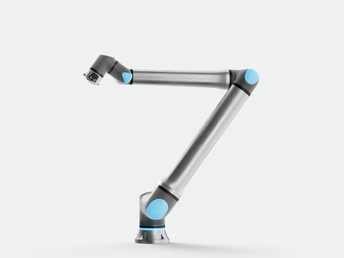
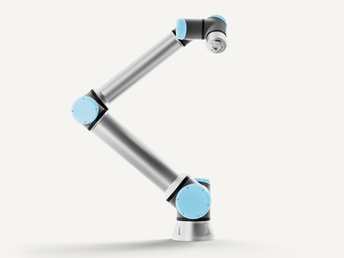
UR cobots provide the reach and repeatable motion needed for consistent part handling around frame welding cells, while maintaining flexibility and minimal integration footprint.

Explore next steps in automotive

Talk to an automotive automation expert

An automotive automation specialist will follow up to discuss your application and production requirements. The goal is to understand your setup and explore practical automation options, no commitment required.