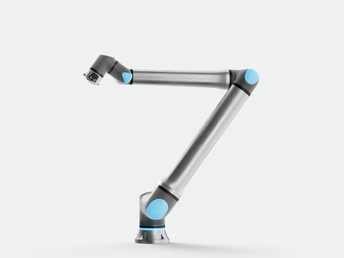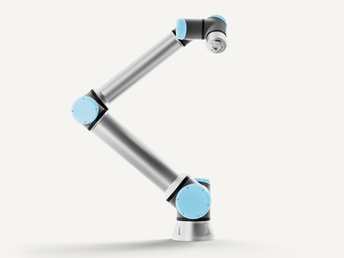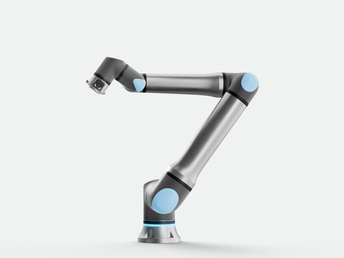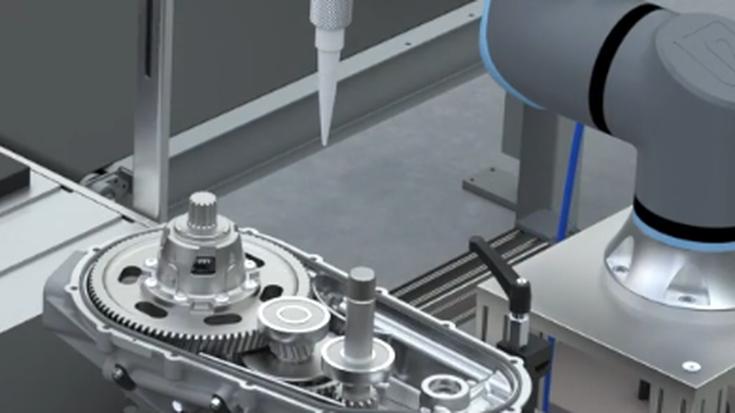
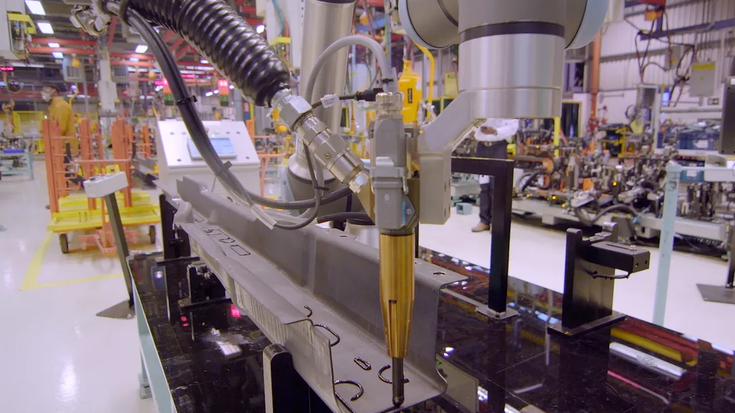
Collaborative robots are used to stabilize glue and adhesive application by executing repeatable bead paths and controlled dispensing motions. This helps maintain consistent process execution across shifts and production volumes while supporting the flexibility required in automotive OEM and Tier supplier environments.
Why automate glue and adhesive application in automotive production
Manual adhesive application can be difficult to standardize, particularly in high‑mix automotive environments where part geometries, materials, and cycle times vary. Inconsistent application can lead to rework, quality defects, and line instability.
By integrating collaborative robots directly into adhesive stations, manufacturers can better control motion, speed, and application paths. This supports predictable adhesive quality while complementing existing assembly processes without introducing rigid automation.

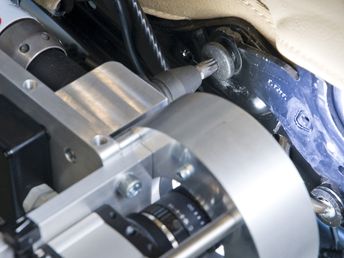
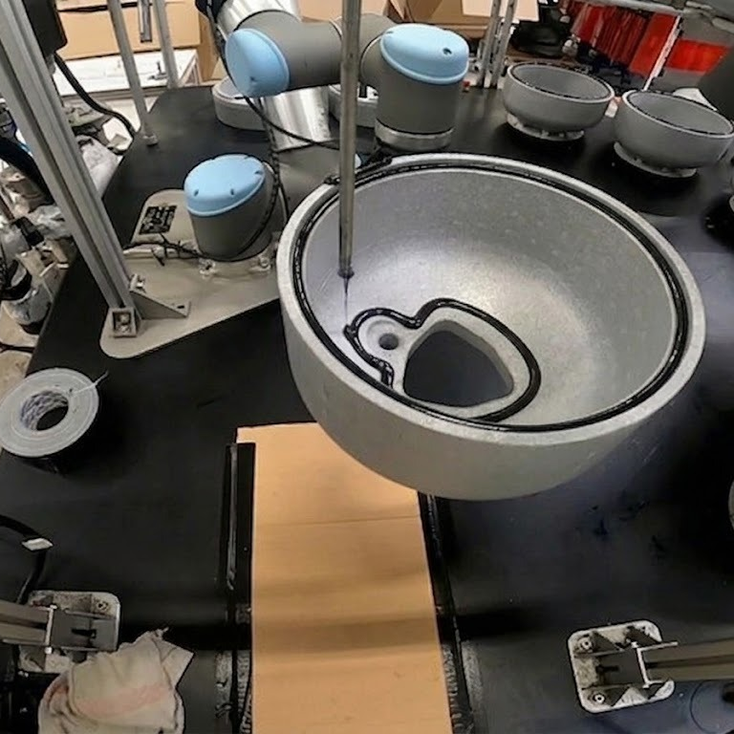
By shifting the glue application to a UR cobot, Mercedes-Benz improved ergonomics, reduced rework, and cut down on delays caused by inconsistent manual application. The robot brought stability to a process that had long depended on operator endurance, and the production line became more predictable as a result.
"The robot now delivers the perfect quality demanded by Mercedes-Benz and we can also take advantage of the workforce to further enhance the product.”
Rogério Dutra, Mercedes-Benz
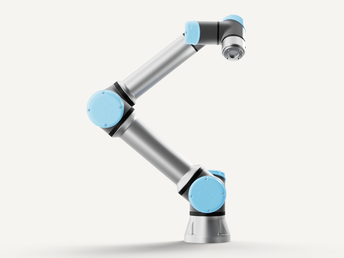
Explore how collaborative robots support consistent adhesive application by controlling bead placement, dispensing motion, and surface interaction—helping reduce process variation and maintain stable production flow across automotive assembly lines.
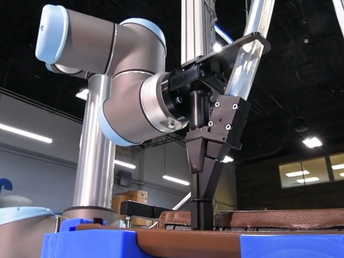
Automotive glue and adhesive processes require precise path control, consistent dispensing motion, and stable interaction with varying part surfaces. Collaborative robots are used in adhesive stations to apply repeatable bead paths and controlled material flow while fitting close to existing fixtures and assembly processes without disrupting established production layouts.

Glue and adhesive application is notoriously sensitive to human factors. Even experienced operators can struggle to maintain perfect bead geometry over long shifts. UR cobots eliminate that variability:
Whether applying structural adhesives on body-in-white components or precision beads on interior trim, UR cobots deliver the same result every cycle.
Automated Glue & Adhesive Automation is often deployed alongside other automotive assembly processes on the same production lines. These related applications support a more complete and flexible assembly strategy.

Broad robotic support for automotive assembly tasks, including part handling, positioning, and secondary operations across sub‑assemblies and production lines. Enables flexible automation without disrupting existing processes.

Automated clip insertion for interior and exterior assemblies, improving consistency while reducing part damage and operator strain. Ideal for high‑mix automotive assembly environments.

Robotic press‑fit operations for controlled insertion of bearings, bushings, and precision components. Ensures consistent force, accurate alignment, and repeatable quality in automotive production.

Automotive manufacturing relies on a continuous flow of materials. Components, kits, and containers need to reach the correct station precisely when required to ensure takt time and stable production.
An automotive automation specialist will follow up to discuss your application and production requirements. The goal is to understand your setup and explore practical automation options, no commitment required.