

Logistics Automation
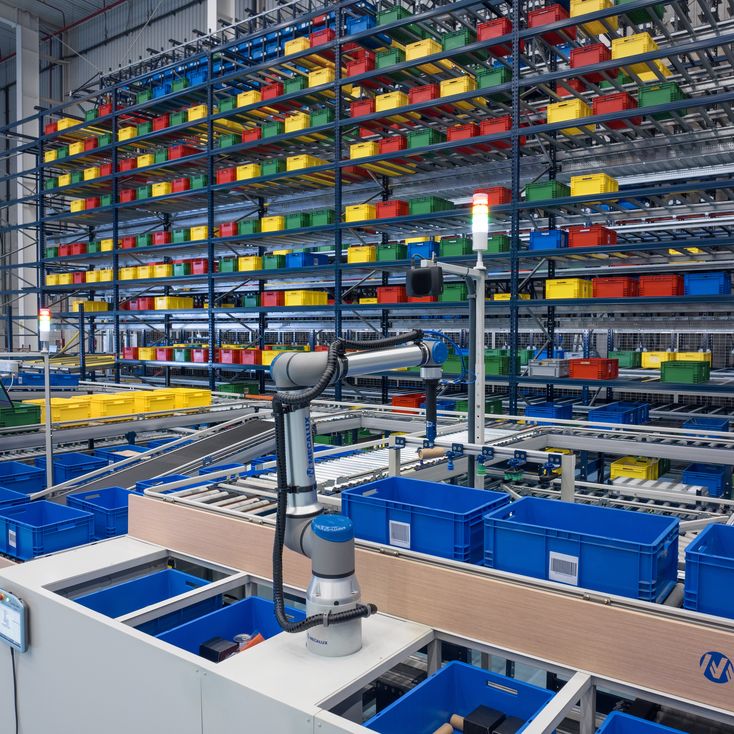
Why Logistics Is a Flow Problem, Not a Task Problem
For many years, logistics was treated as a supporting function—necessary, but secondary to what happened on the production line or at the point of order fulfillment. The focus was on optimizing individual tasks: picking faster, packing more consistently, palletizing more efficiently, but in practice, operations often break down between these tasks.
Waiting time accumulates between picking and packing. Variability increases between sorting and shipping. Replenishment arrives too early or too late. Small inefficiencies compound into congestion, idle time, and missed delivery expectations. What appears to be a series of isolated bottlenecks is, in reality, a flow problem.
The ability to maintain continuous, predictable flow across logistics operations has become a defining factor in operational performance. As order profiles become more variable, volumes fluctuate, and labor constraints persist, it is more valuable than ever to ensure that logistics and fulfilment operates in a coordinated way.
A system-level approach to improving logistics performance
In logistics and fulfillment environments, two distinct but complementary roles must be addressed:
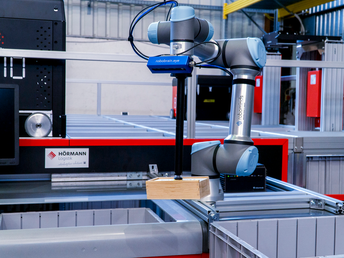
Task execution
Picking, sorting, packing, palletizing—activities that require precision, repeatability, and consistency
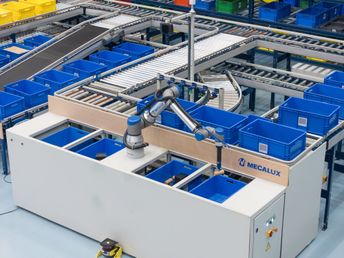
Flow management
Moving materials, replenishing workstations, connecting processes, and preventing delays between stages.
From Fragmented Workflows to Connected Operations
Treating these as separate problems often leads to partial gains. Automating a packing station may improve local throughput, but if upstream supply or downstream transport remains inconsistent, the system as a whole continues to struggle. Real performance improvements happen when both layers—task and flow—are addressed together, turning fragmented workflows into connected operations.
This is the underlying principle behind modern logistics automation: building systems that maintain continuity from receiving through fulfillment to outbound shipping.
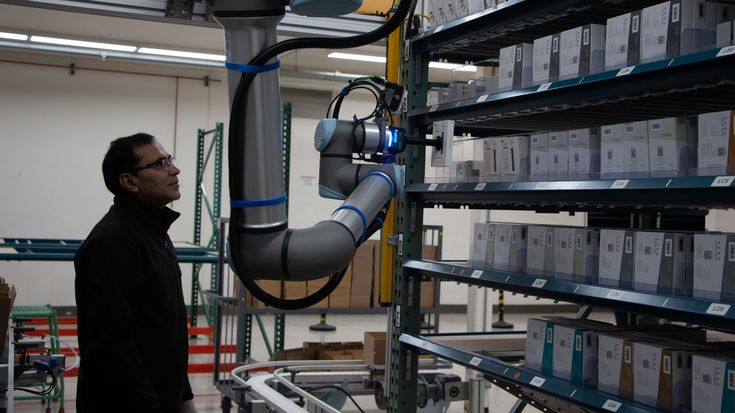
Consider your operational friction
For organizations evaluating where to begin, the most effective starting point is considering operational friction. Where do delays build up between process steps? Which tasks consume time without adding proportional value? Where does variability disrupt otherwise stable operations? These questions define where automation will have the greatest impact.
The sections that follow explore how collaborative robots and autonomous mobile robots are applied across core logistics workflows—from picking and packing to sorting and palletizing. More importantly, they show how these applications, when connected, move operations from fragmented execution to predictable flow.
Automation Across the Entire Logistics Flow
A set of robotic and automated solutions designed to close the gaps between tasks and sustain continuous, predictable flow.
Robotic Picking
Automate how parts are picked, verified, and delivered
Goods-to-Person (G2P) Picking Automation
Goods-to-Person Picking: Eliminate Travel, Stabilize Throughput
Robotic Packing
Automate packing throughput, consistency, and flow
Robotic Sorting
Stabilize Throughput, Eliminate Errors, and Scale Operations with Teradyne Robotics
Robotics Palletizing
Increase throughput. Reduce labor dependency. Exceed Delivery Accuracy Expectations
Talk to a Logistics Automation Expert
A logistics automation specialist will follow up to review your operations, workflows, and fulfillment challenges. The goal is to understand your setup and identify practical automation opportunities to improve efficiency and scalability—no commitment required.
