關節移動

描述

The Joint Move is a move command node that supports Motion Profiles. The command creates a movement from point A to point B that is optimal for the robot. 該移動路徑可能不是 A 和 B 之間的直線,但是對關節的開始位置和關節的結束位置而言是最佳的。 「關節移動」會依照機器人手臂關節空間中的計算來移動。 控制關節同時完成其移動。 此移動類型將為工具沿著一個曲線路徑前進。


To access Joint Move command

  1. Go to the main program screen. 請參閱Command Nodes

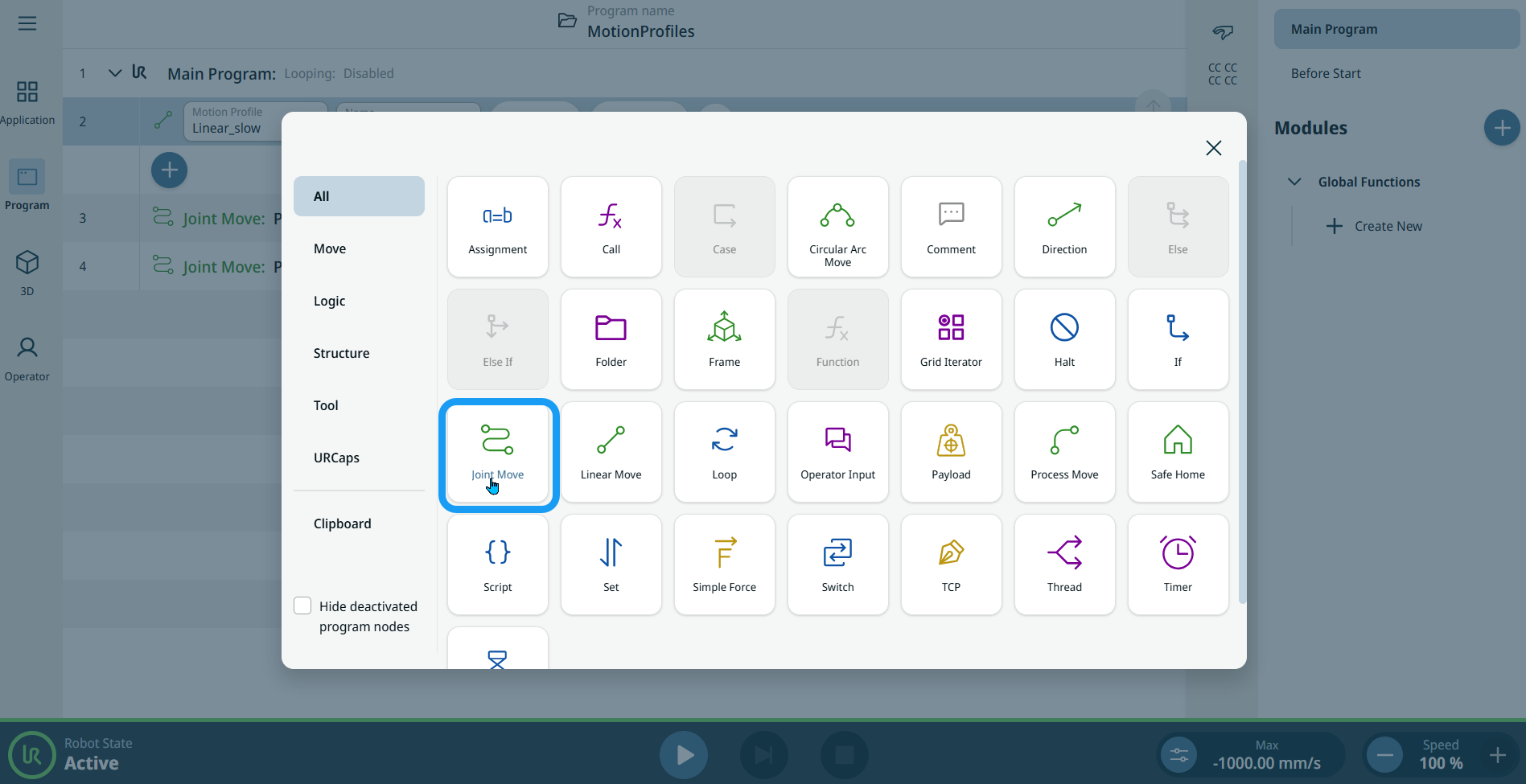
  2. Tap the Joint Move icon in the Commands toolbox.


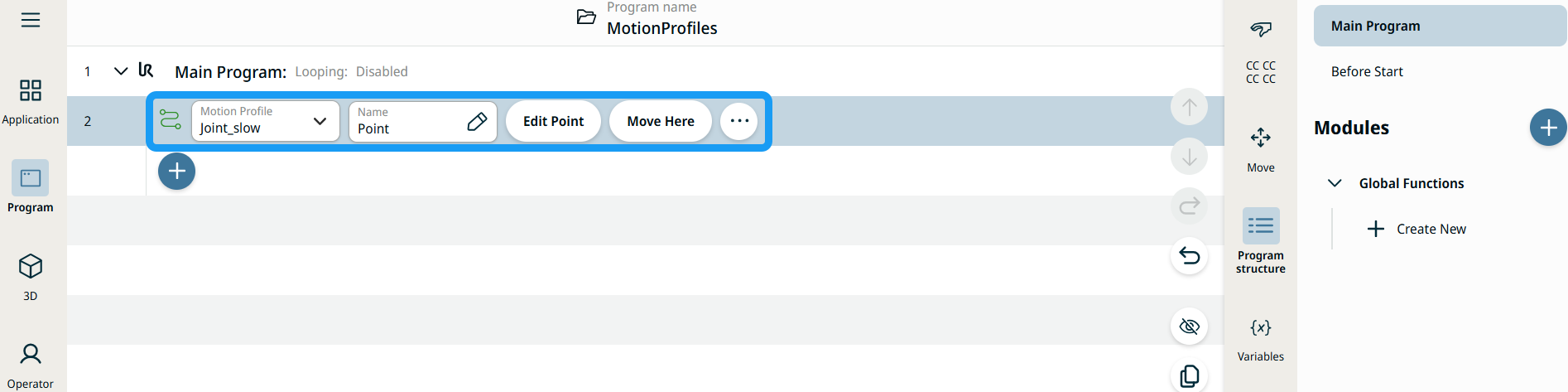
    A node with two editable fields, two buttons, and ellipsis icon is inserted into the program tree. These are two editable fields:

    • 運動設定檔

    • 名稱

    These are the two buttons:

    • 編輯點

    • 移動到此處


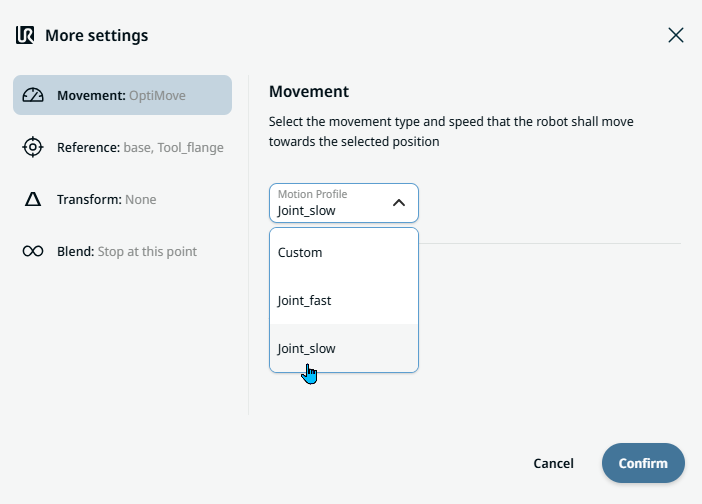
  1. Tap the Motion Profile field and select the pertinent from the three choices are available:

    • 自定義

    • Joint_fast

    • Joint_slow

  2. Tap the Name field, and three tabs appear:

    • 變數

    • 表達式

  3. Enter the data in the Value, Variable, and Expression tabs, and tap Confirm. See Value-Variable-Expression Tabs.

  4. Tap Edit Point. A new screen appears with the robot arm interface where you can jog the robot to the desired position.

  5. Tap More button.

    More settings screen appears with four settings:

    • 移動

    • 參考

    • 轉換

    • 交融


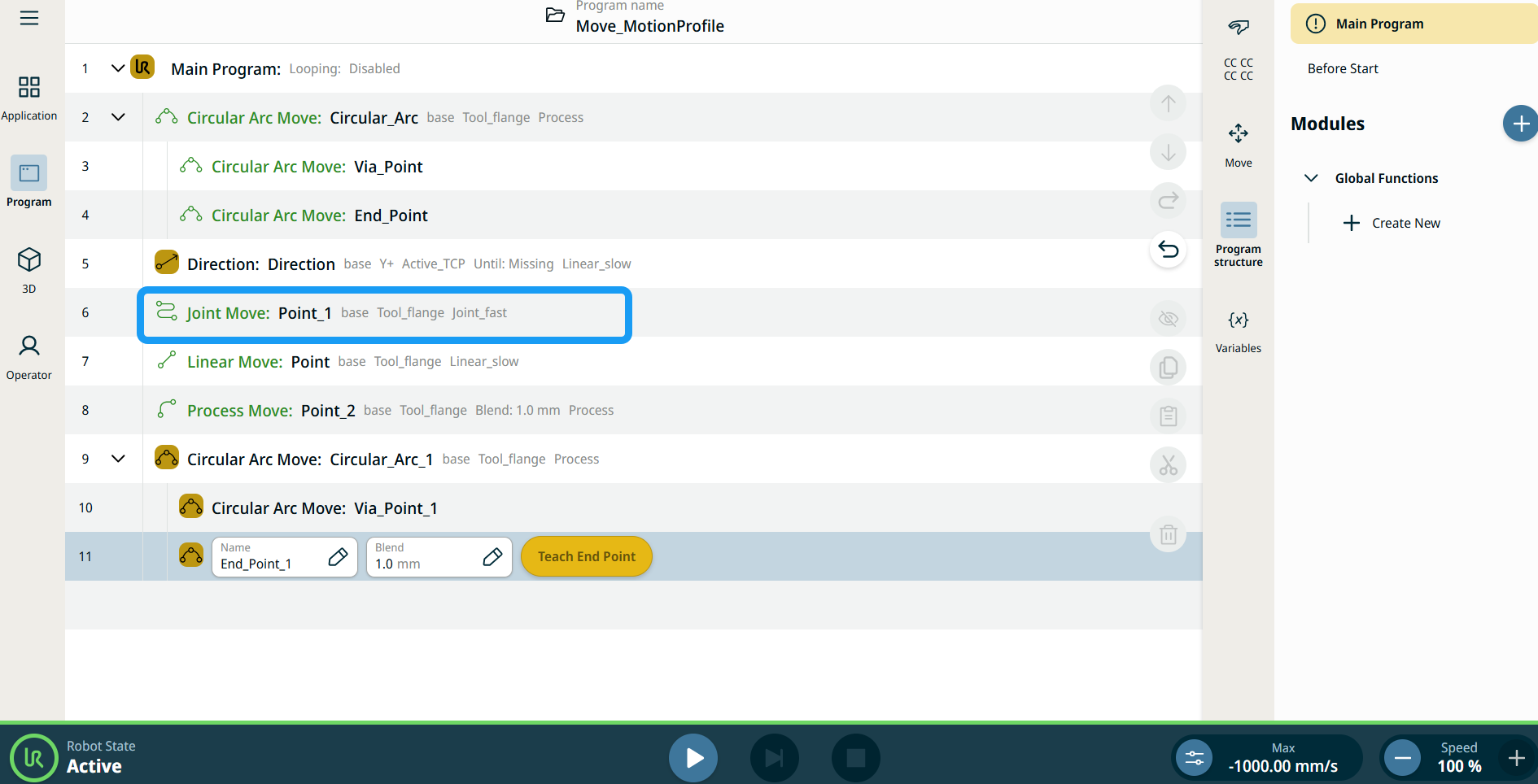
移動節點上的運動設定檔標籤

程式樹中所有與移動相關的命令節點,都會顯示與每個節點相聯的運動設定檔。 此功能可讓使用者查看移動節點上已選取的運動設定檔。 此功能在下列命令節點實行:

具有自訂運動配置檔案的移動節點,將會顯示速度和加速度值,而不會顯示運動配置檔案。


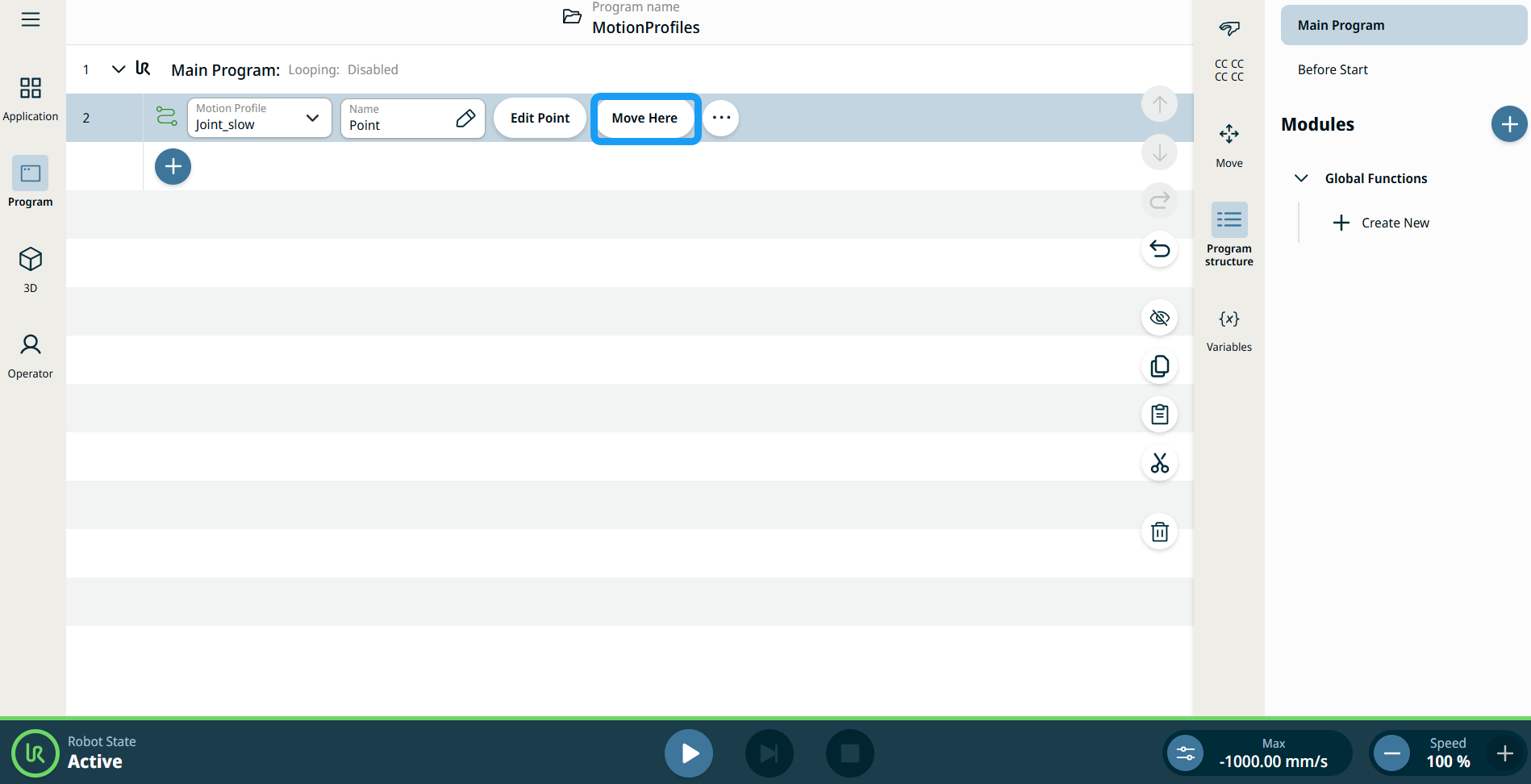
使用「移動到此」按鈕

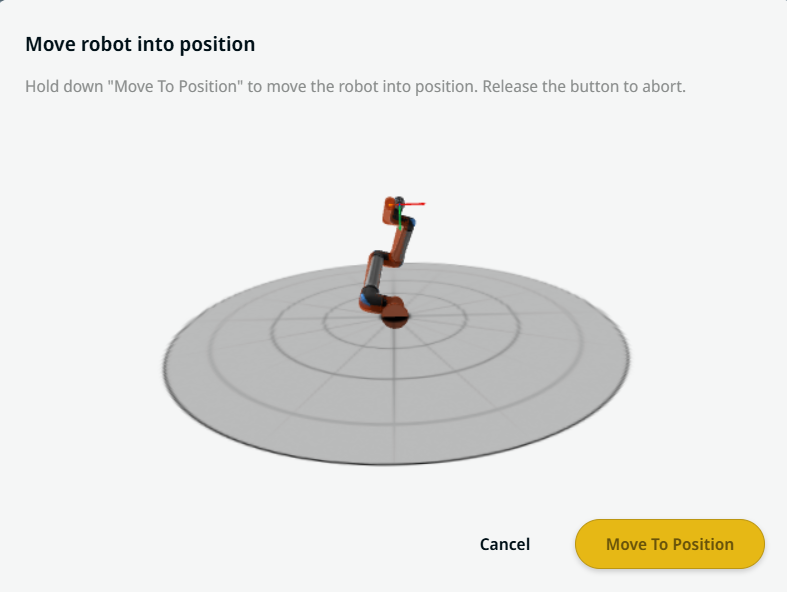
移至此處按鈕會顯示在線性移動關節移動命令中。 可使用此功能直接從程式樹移動到路點的位置。 按移至此處按鈕,就會開啟「將機器人移動到位」對話方塊。 此按鈕會已教導在路點的情況下顯示,而且僅會在機器人狀態為正常縮減模式時啟用。


  1. 點按新增圖示將「線性移動」和「關節移動」插入命令樹。

  2. 點按命令樹中第一個移動節點(「線性移動」或「關節移動」節點)的編輯點按鈕。

  3. 使用 X、Y、Z 座標中的加減按鈕來緩慢移動機器人。 Tap Save.

  4. 在命令樹的第二個移動節點中,點按移至此處。 會顯示一個彈出畫面,可啟用「將機器人移動到位」。 長按移動到位置。 點按「確定」。


Movement setting
  1. Tap the Movement setting on the left side. A Motion Profile field with the following choices appears on the right side. Joint_slow is the default.

    • 自定義

    • Joint_fast

    • Joint_slow

  2. If Custom is selected, three more fields appear:

    • 速度類型

    • 速度

    • 加速度

  3. Choose either OptiMove or Classic when you tap Speed Type.

  4. Tap the Speed field, and the Value, Variable, and Expression tabs pop up.

  5. Enter data in each tab, and tap Confirm. See Value-Variable-Expression Tabs.

  6. Tap the Acceleration field, and the Value, Variable, and Expression tabs pop up.

  7. Enter data in each tab, and tap Confirm. See Value-Variable-Expression Tabs.

  8. When Joint_fast and Joint_slow are selected, the OptiMove speed and acceleration are shown.


Reference setting
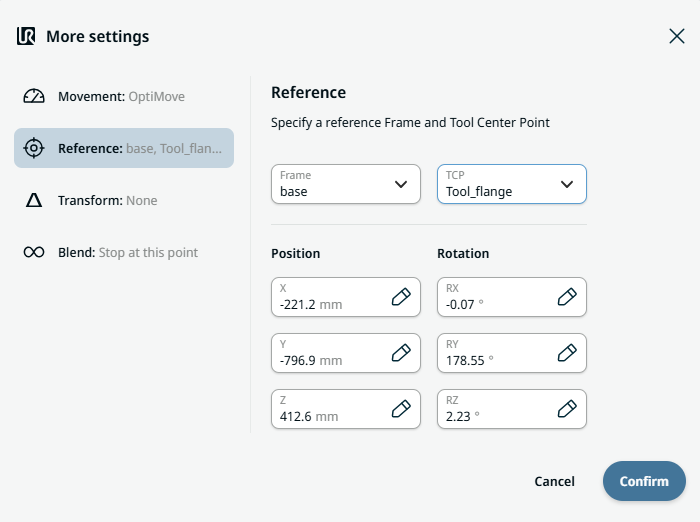
  1. Tap the Reference setting.

  2. Choose either Frame or TCP field.

    In the Frame field, four choices are available:

    • 世界

    • 底座

    • flange

    • tcp

    In the TCP field, two choices are available:

    • Active_TCP

    • Tool_flange

  3. In the Position column, tap the X, Y, Z tabs and enter your chosen value for the robot, and Confirm.

  4. In the Rotation column, tap the RX, RY, RZ tabs and enter your chosen value for the robot, and Confirm.


Transform setting
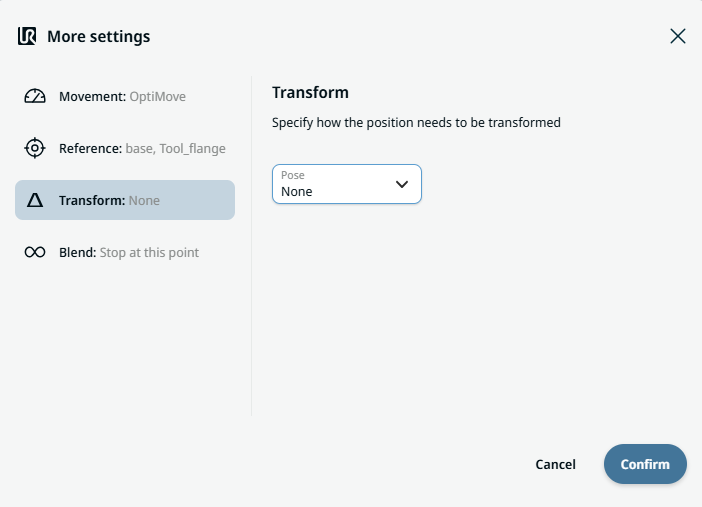
  1. Tap the Transform setting.

  2. Tap the Pose field and Confirm.


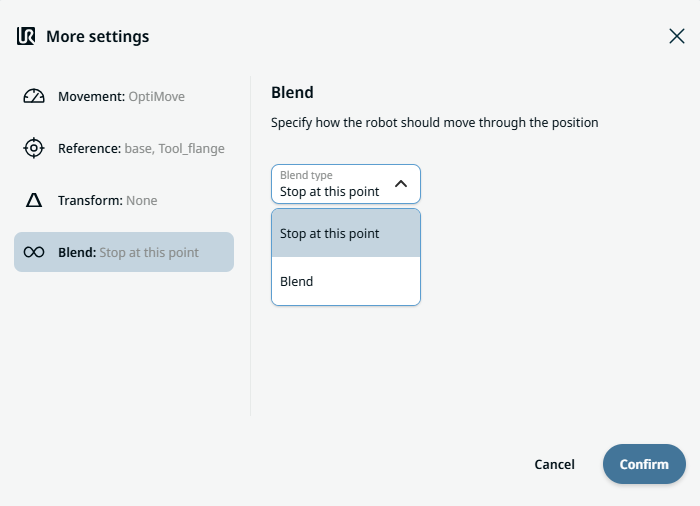
Blend setting

  1. Tap the Blend setting.

    A Blend type field appears with two options:

    • 此時停止

    • 交融

  2. When you choose Stop at this point, no further action is needed but only Confirm.

  3. Tap Blend, and a Radius field is inserted.

  4. The Value, Variable, and Expression tabs pop up when you tap the Radius field.

  5. Enter data in each tab, and tap Confirm. See Value-Variable-Expression Tabs.

  6. To finish, tap Confirm in the More settings screen.