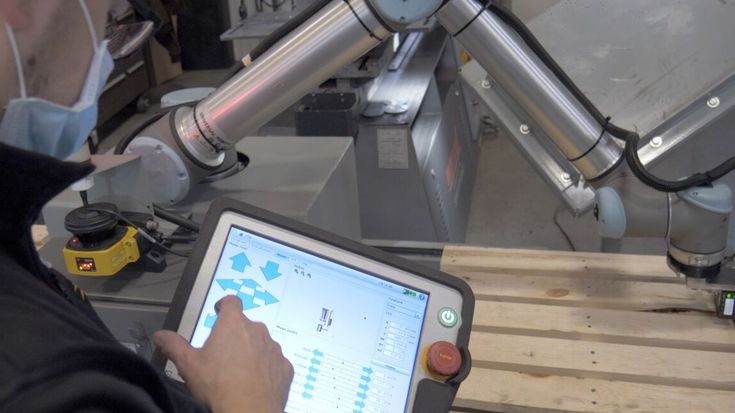
“Traditionally, we would just do two or three passes on welding because we didn’t understand how to use some of those more advanced features,” says Boogerd. “But having used the UR robot, we’re able to use the weaving feature, which cuts cycle time in half. It also saves on consumables since we’re not laying all that extra gas and bead.” Weld Robot Supervisor Van DeKamp adds: “That was awesome. I now pulse and weave on probably seven different programs, which has helped drastically. I have also taken the advanced welds I have learned on the UR robot and put them on our traditional robots too.”
The BotX Welder deployment has freed up workers to focus on more ergonomic, higher-value tasks such as fabricating and tacking, while the robot lays the bead. “In the end, you see more production going out the door because I can have the robot working without an operator having to babysit it,” says Boogerd. Given the success of its BotX deployment, Siouxland plans to add another welding cobot to its fleet, says Boogerd: “We have the traditional UR10 robot and the BotX welding robot. And we’ve seen the advantages and production just keeps increasing. And, instead of having to hire more people, we can utilize that time with the robots.” The company also plans to test its stamping cobot on machine tending tasks involving CNC machines, mills and lathes with a view to adding more cobots to that side of its business too.