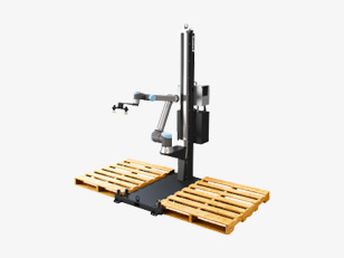
Reduce waste and increase accuracy by using a UR robot for material removal applications. Whether you are sanding, drilling, or grinding surfaces, collaborative robots can perform with highly precise movements and consistent pressure, resulting in high-quality and effective material removal on intricate shapes.
Material removal is a critical step in manufacturing, as it transforms raw components into precise, high-quality units that seamlessly integrate into complex systems. Whether it is focused on refining a new product to meet stringent performance and safety standards or restoring worn and faulty items, material removal requires exceptional accuracy—carefully processing material to meet exact specifications while optimizing waste management.
However, the task is far from simple. It demands skilled operators and involves high risks, particularly when working with tough materials, completing long cycle times, and handling potential hazards such as cutting tools and high temperatures. Cobots with force and torque sensing provide the perfect solution, ensuring precision, minimizing waste, and streamlining the entire process—from grinding to drilling—while maintaining a safe, cost-effective operation.
Material removal operators face numerous hurdles, including tough materials, long cycle times for large-scale and high-precision jobs, and issues like vibrations and instability in workpieces. With built-in force and torque sensing, collaborative robots deliver pinpoint accuracy, ensuring consistent tool placement and reducing waste and scrap. Whether it’s grinding, deburring, milling, routing, or drilling, cobots streamline operations and boost cost-effectiveness.

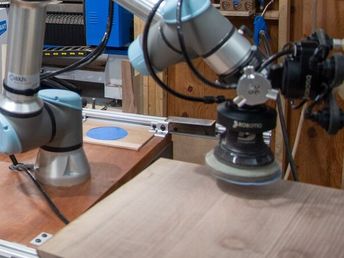
Traditional sanding requires manual labor and can be tiring, time-consuming, and repetitive work. Robot arms can be programmed to smooth and polish a material's surface prior to painting or finishing, producing consistent and precise results for extended periods. Human employees can be freed up for more skilled tasks.
Drilling is demanding, repetitive work that can lead to fatigue and strain. UR collaborative robots provide consistent precision over long periods, freeing workers to focus on more skilled, less physically taxing jobs. This approach enhances productivity and prioritizes worker well-being by reducing manual workload.
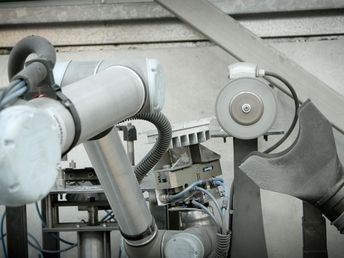
Cobots can grind with highly precise movements and consistent pressure, resulting in evenly ground surfaces every time. UR robots can perform complex, multi-directional grinding patterns with ease, and critical parameters such as speed, pattern, and pressure can be calibrated. Added-value hardware and software, such as integrated force sensors, can also allow cobots to self-regulate grinding pressure to prevent damage.
Speak to our cobot experts today to find your tailored solution.
Our collaborative, industrial robots require add-ons to reach their full potential. This worlds of additional products in an entire ecosystem on its own. We at Universal Robots take the high pride in our ecosystem, which is called UR+.
Universal Robots has deployed over 100,000 cobots into every manufacturing industry. Companies of all sizes, from Fortune 500 giants to local contract machine shops, are leveraging our 6th generation cobots to increase productivity and quality and improve job satisfaction for their manufacturing teams.

UR cobots meet the demands for flexibility head-on with industry-leading ease-of-use, intuitive programming, and a powerful back-end for OEMs and developers to add value and meet specific needs. UR cobot-based systems generate ROI that is usually measured in months, not years.

Universal Robots has developed the most complete set of safety tools and functions in the industry. Our safety protocols can be configured to meet the varied safety requirements of your plant or facilities and your application risk assessment, letting your manufacturing team work safely side-by-side with UR cobots.
Thousands of businesses rely on Collaborative Robots to...
- Increase productivity
- Adapt to changing product demand
- Improve employee well-being and retention
- Staff through labor shortages