Person-to-Goods (P2G) Picking Automation

Optimize Existing Picking Operations Without Rebuilding 
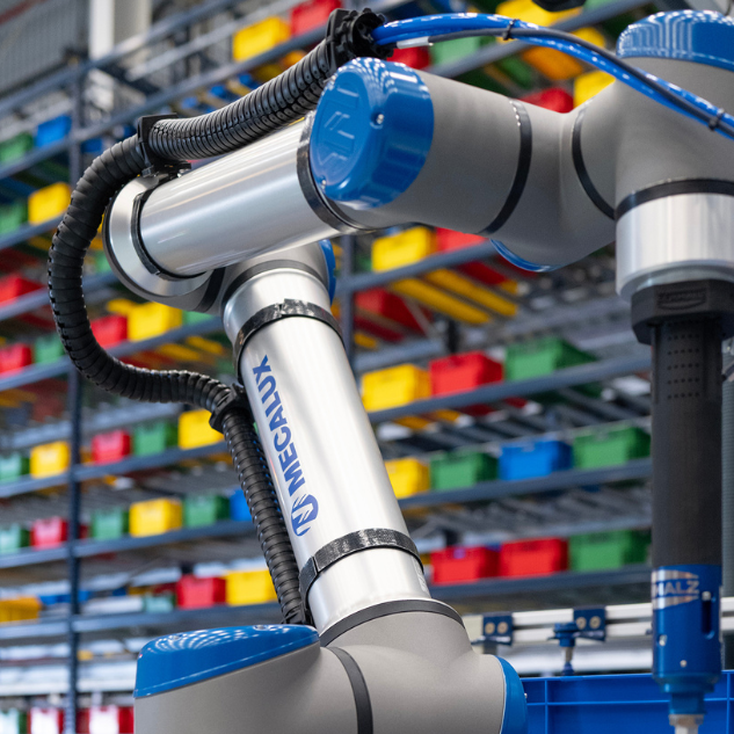
Collaborative robot arm performing automated picking in a warehouse with color-coded storage bins

Reinventing Warehouse Picking with P2G

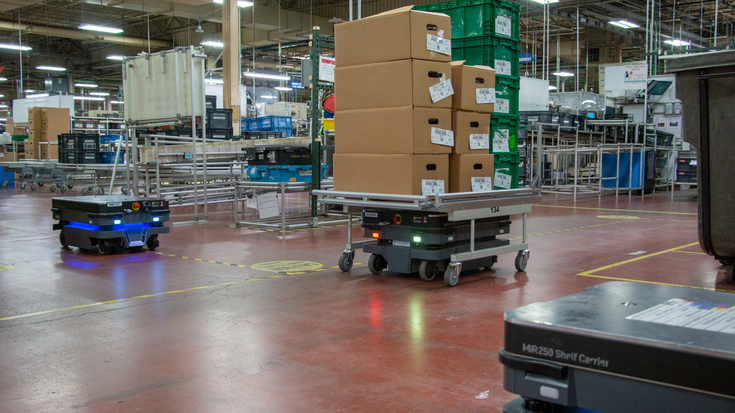
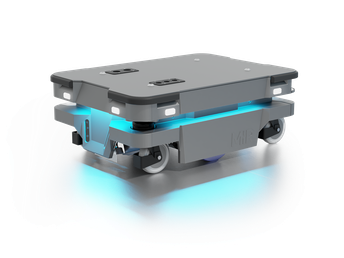
P2G picking remains the most widely deployed picking model because of its flexibility. However, this flexibility comes at a cost: high labor intensity, inconsistent productivity, and significant non–value-added time spent walking, searching, and transporting materials. Rather than replacing the P2G model outright, modern warehouse automation focuses on improving it. The goal is to remove inefficiencies while preserving flexibility, allowing operations to gain meaningful productivity improvements without large-scale infrastructure changes. This is where AMRs play a critical role. By taking over cart transport, zone transfers, and replenishment tasks, AMRs eliminate the need for operators to carry or push items across long distances.

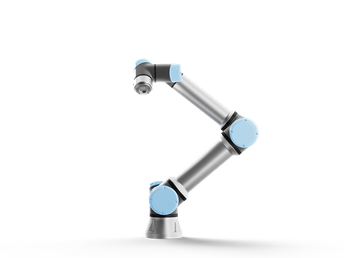
UR cobots complement this approach at the point where variability decreases—typically at packing, verification, and sorting steps. These downstream processes are highly repetitive and well-suited to automation. This creates a hybrid model where humans retain flexibility in the picking process while robots stabilize the most error-prone and labor-intensive steps around it.

Advantages of Person-to-Goods Automation

As operations mature, orchestration again becomes the defining factor. AMR fleets must be dynamically dispatched to support picking routes, supply zones, and connect workflows across receiving, storage, and shipping. When coordinated properly, the result is not just incremental improvement—it is a step change in how efficiently labor is utilized across the entire facility.

Operational Outcomes Typically Include:

  • Reduced walking distance and operator fatigue
  • Increased picks per hour without major layout changes
  • Improved accuracy in packing and verification steps
  • Better labor utilization across picking and downstream processes

Case Study Callout:
In MiR deployments such as DENSO, workers previously spent a large portion of their time transporting materials rather than performing value-added work. By automating these transport flows, AMRs enabled a shift in labor allocation, illustrating how person-to-goods operations can be optimized by removing movement rather than replacing picking entirely.

Denso Case Story Picture 9

P2G Robotic Picking Customer Success

At DENSO, MiR robots replaced manual transport tasks that required workers to walk long distances and push carts throughout the facility. The solution freed employees to focus on higher-value work and enabled a more efficient material flow to production and work areas.

DENSO Case Story

MiR stood out for the ability to use REST API calls, the intuitive nature of the Fleet, the ease of mapping, ease of mission creation, ease of changing locations. It was just extremely intuitive compared to the other platforms that we looked at.

Travis Olinger. TIE Engineer, DENSO

Choosing the Right Robotic Picking Automation

Contact our logistics and fulfillment automation team to discover the robotic solution that can meet your picking requirements

Talk to a Logistics Automation Expert

A logistics automation specialist will follow up to review your operations, workflows, and fulfillment challenges. The goal is to understand your setup and identify practical automation opportunities to improve efficiency and scalability—no commitment required.