Robotic Mixed-SKU Sorting (High-SKU Environments)


High-SKU operations introduce a different class of sorting problem. As SKU counts increase, order profiles become less predictable, and traditional sorting methods—based on batching, zoning, or fixed routing—start to break down. Items no longer move in clean, repeatable patterns. Instead, operations require constant reallocation of products across orders, destinations, and supporting DEA (Delivery Expectation Accuracy).
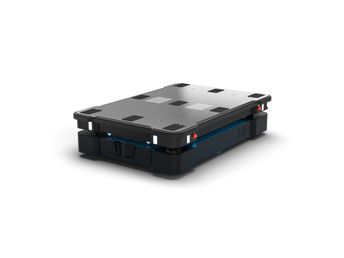
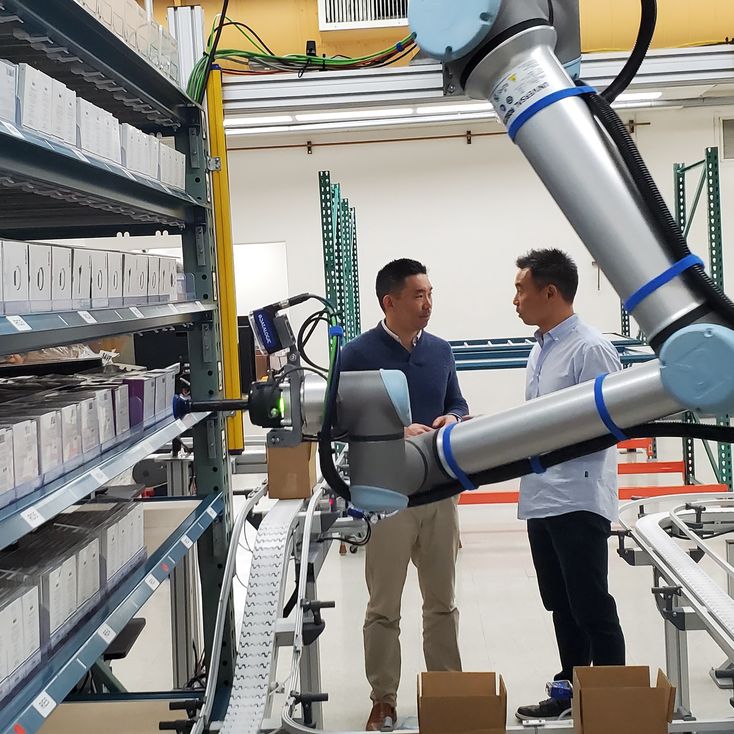
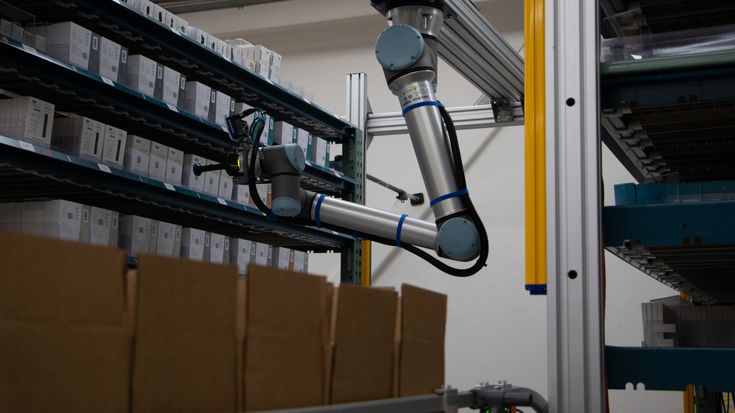
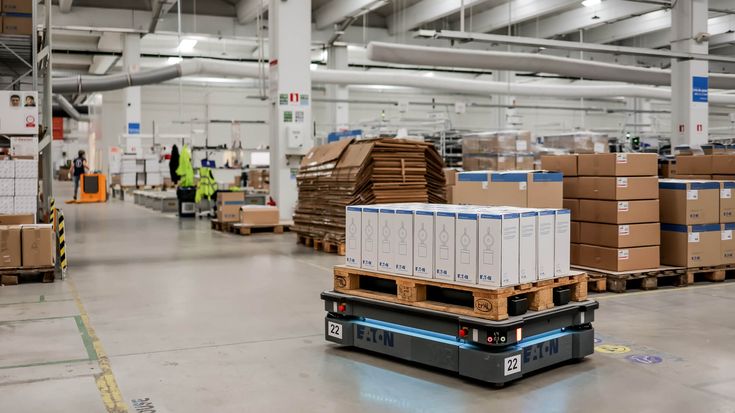
UR cobots manage item-level identification and placement, ensuring each SKU is validated and sorted correctly regardless of variation. MiR AMRs manage the movement of totes, carts, and containers across the facility, dynamically routing them based on real-time demand rather than fixed zones.
This allows sorting to adapt continuously as SKU mix and order demand change—without reconfiguration or manual intervention.

How UR Cobots and MiR AMRs Enable Automated Mixed-SKU Sorting
Mixed-SKU environments require both precision at the item level and flexibility at the system level.
- UR cobots manage SKU variability at the point of sort - using vision systems and barcode validation, UR cobots identify items regardless of size, shape, or packaging variation, and place them into the correct destination container, order, or flow path.
- MiR AMRs manage dynamic flow across the operation – these autonomous robots transport containers between picking, sorting, and packing areas, routing them based on real-time conditions rather than fixed infrastructure.
- Fleet orchestration adapts continuously – MiR MFE software coordinates AMR transport, dynamically allocating work and preventing congestion as SKU mix shifts throughout the day.
This combined system directly addresses the constraints of high-SKU operations:
- Eliminates dependence on fixed zones and batching: Sorting decisions are made dynamically, not based on predefined SKU groupings
- Handles SKU variability without reconfiguration: UR cobots adjust automatically to different item profiles using vision and validation
- Improves flow across multi-SKU operations: MiR AMRs continuously rebalance movement between zones based on demand
- Reduces congestion and cross-traffic: Dynamic routing avoids the bottlenecks common in zone-based systems
- Scales with SKU growth and order complexity: Additional UR cobots and MiR AMRs extend capacity without redesigning layouts
AMR systems are particularly effective in environments with high variability, as they can dynamically allocate tasks and adapt routing in real time to maintain throughput and avoid congestion.

Mixed-SKU Sorting with Robotics Requires a Different Approach
High-SKU environments expose the limitations of traditional sorting systems. Fixed routing, batching, and zone-based logic cannot keep up with dynamic demand.
UR cobots and MiR AMRs shift sorting from a static process to a continuous, adaptive system:
- UR cobots ensure precision despite SKU variability
- MiR AMRs ensure flow despite operational complexity
Together, they enable a sorting model that scales with SKU growth, rather than being constrained by it.
The result is a fulfillment operation that remains stable—even as product variety and order complexity continue to increase.
Choosing the Right Robotic Sorting Automation
Talk to a logistics automation expert
A logistics automation specialist will follow up to review your operations, workflows, and fulfillment challenges. The goal is to understand your setup and identify practical automation opportunities to improve efficiency and scalability—no commitment required.