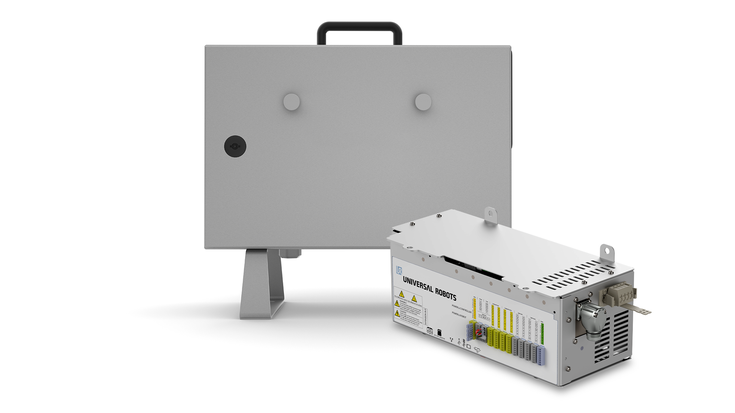
The control box features an Ethernet port for network connections, allowing the robot to communicate with other devices on the network, including computers, PLCs, and other industrial equipment. This connection is crucial for integrating the robot into larger automation systems and for remote monitoring and control.
For information about the various supported protocols, see the Communication Protocols section.
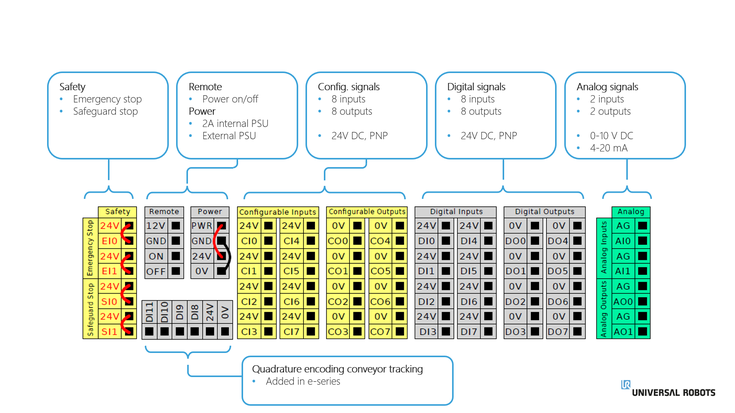
Digital and Analog I/O:
Digital I/O ports for connecting sensors, actuators, and other binary devices.
Analog I/O ports for connecting devices that require variable control signals, such as pressure sensors or variable speed drives.
Safety Inputs/Outputs:
Dedicated safety I/O ports for connecting external safety devices, such as emergency stop buttons, safety light curtains, and other safety interlock systems. These connections ensure compliance with safety standards and enhance the safe operation of the robot.
USB Ports:
USB ports for connecting external storage devices, and peripherals, or for software updates and data transfer.
External Screen:
The Control Box features 1 mini-display port, which can be used to connect an external monitor to mirror the User Interface.