<link rel="stylesheet" href="styles-ENMP3CLZ.css"> Skip to main content

Emerson boosts efficiency, consistency, and operator well-being with collaborative automation

In short

Emerson modernized its production by introducing collaborative robots to automate kitting, thread tapping, and O-ring handling. The result: faster cycle times, improved quality consistency, and a safer, more ergonomic workplace.

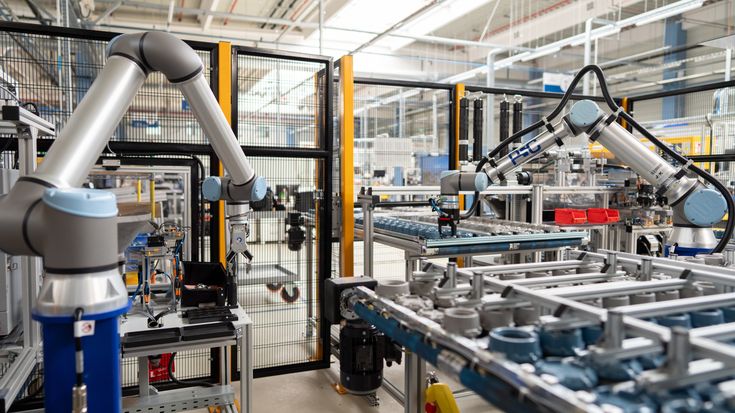
As part of its continuous improvement strategy, Emerson’s measurement instrumentation production facility implemented collaborative robots from Universal Robots into several key production operations. By taking over repetitive and manual tasks, the solution increased efficiency, enhanced workplace ergonomics, supported employee engagement, and provided the flexibility needed to scale production.

Outcomes at a glance:

  • Cycle times reduced by 18–22%, increasing productivity and operational efficiency
  • More than 60% reduction in ergonomic exposure, particularly repetitive waist and forearm movements
  • Enhanced process repeatability through automation-supported precision
  • Faster deployment through intuitive programming and ease of use
  • Greater process stability and more predictable production performance

The challenge

Within Emerson’s production environment, production processes such as kitting and thread tapping relied on manual execution. As production volumes and operational requirements evolved, these activities presented opportunities to further optimize throughput and efficiency.

At the same time, manual handling required a high level of operator attention and expertise. Emerson identified an opportunity to further enhance process consistency while improving workplace ergonomics.

The company needed a solution that could:

  • Improve speed and consistency
  • Reduce manual workload and errors
  • Enhance safety and ergonomics
  • Deliver fast ROI without complex deployment

Emerson

Industry Manufacturing automation
Country Romania
Number of Employees 3,700
Cobot Used UR10e

We tried to come up with automated processes that are reducing the non-productive and repetitive movements that may cause fatigue and ergonomic issues in time. Safety in Emerson is one of our core values and is driving us towards identifying possible automation solutions.

Josef Szekely, Manufacturing Manager

Key value drivers

  • Ease of use
  • Precision and reliability
  • Flexibility across processes
  • Fast ROI and cost savings

Tasks solved by collaborative robots

  • Kitting operations
  • Thread tapping processes

Automation opportunities addressed

  • Reducing repetitive manual activities
  • Capturing ergonomic improvement opportunities
  • Achieving further process standardization and consistency
  • Increasing production efficiency and throughput
Emersons’s primary challenges were labour shortages and the demands of high-mix, low-volume production

From concept to customized automation

Emerson identified three key opportunities for automation: kitting, thread tapping and O-ring handling tasks. All three involved high-frequency tasks that presented opportunities to further improve ergonomics and efficiency.

The implementation involved customization and validation to ensure the solution was optimized for Emerson's specific production requirements.

Fast learning, smooth adoption

Operators were trained through short, hands-on sessions, enabling quick adoption without the need for advanced programming skills. The system’s accessibility empowered teams to independently integrate automation into daily operations, accelerating implementation and reducing reliance on specialized expertise.

Key adoption benefits:

  • Quick and straightforward operator training
  • User-friendly programming interface
  • Fast deployment with minimal disruption to production
  • Easy adaptation to changing process requirements
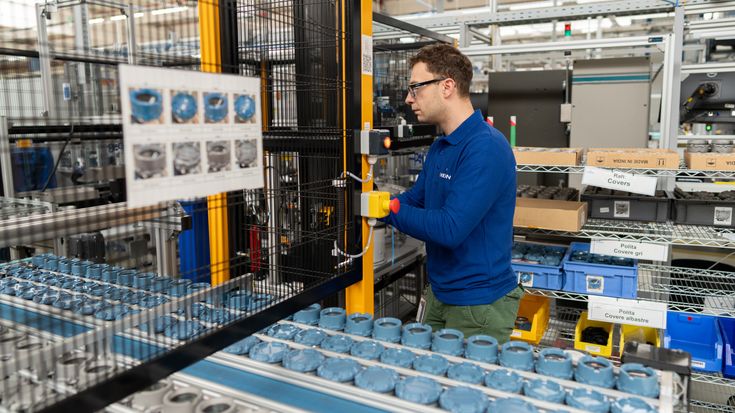
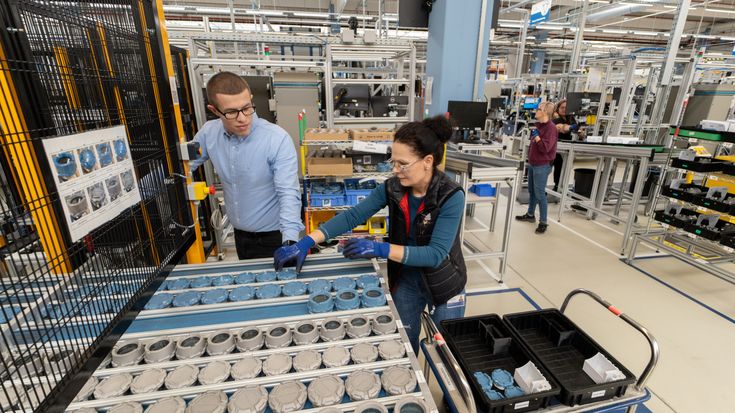
The introduction of cobots had a strong positive impact on employees.

Driving performance through precision and consistency

With collaborative robots integrated into production, Emerson has transformed both performance and scalability. Cycle times were reduced by approximately 18 – 22%, depending on the product variant, while process flow became significantly more stable. Quality improved through greater precision and repeatability, resulting in fewer errors and a more predictable operation.

One of the most significant gains was consistency. Emerson enhanced process repeatability through automation-supported precision, enabling highly consistent performance across product variants.

This shift toward precision-driven automation has strengthened operational stability and positioned Emerson to scale production with confidence, supporting long-term competitiveness in an increasingly demanding global market.

Key performance drivers:

  • Precision and repeatability improved product quality and consistency
  • Automated processes reduced variability and increased predictability
  • Intuitive programming accelerated deployment and adaptation
  • Greater autonomy reduced dependence on specialized resources
  • Standardized automation enabled consistent performance across multiple production processes
Emersons’s primary challenges were labour shortages and the demands of high-mix, low-volume production

A more engaged and future-ready workforce

The introduction of cobots had a strong positive impact on employees. By automating physically demanding and routine tasks, workers could focus on higher-value activities.

Operators quickly recognized the value of the solution once they experienced how automation supported their daily work.

After experiencing both approaches, operators clearly recognized the ergonomic and productivity benefits that cobots brought to their daily work. One operator summarized the experience simply:

It was better when the robots did this.”

This experience reinforced how collaborative robots improved both working conditions and overall efficiency, turning doubt into strong support across the production floor.

Unexpected benefits

Beyond operational gains, Emerson uncovered a powerful human impact: increased engagement and stronger collaboration across teams.

By automating routine and physically demanding activities, the initiative not only improved operational performance but also fostered a more connected, proactive, and innovation-driven work environment.

Key people-focused benefits included:

  • More than 60% reduction in ergonomic exposure, particularly repetitive waist and forearm movements
  • Reduced repetitive and non-value-added tasks
  • More time for higher-value work and continuous improvement activities
  • Increased employee engagement and collaboration across teams
  • A more proactive and innovation-driven workplace culture

Looking Ahead

What started as a solution to repetitive tasks has evolved into a foundation for smarter manufacturing. Collaborative robots are now an integral part of Emerson’s operations, driving efficiency, consistency, and safer working conditions while reshaping how teams collaborate and innovate.

Emerson is not just optimizing processes, it is redefining how people and automation work together. As the company continues to scale and expand automation, this transformation goes beyond technology, laying the foundation for a more resilient and future-ready operation.

Collaborative robots are not just tools in our factory, they are partners in our evolution. And this is only the beginning.

Darius Ispas, Process Automation Engineer

Get in touch with Universal Robots

Thousands of businesses rely on Collaborative Robots to...

  • Increase productivity
  • Adapt to changing product demand
  • Improve employee well-being and retention
  • Staff through labor shortages