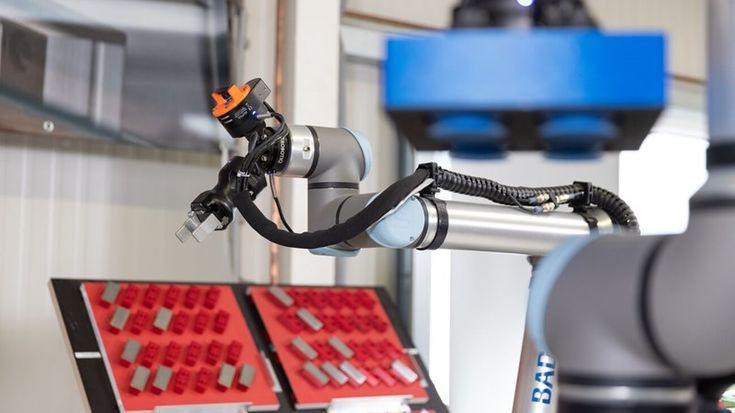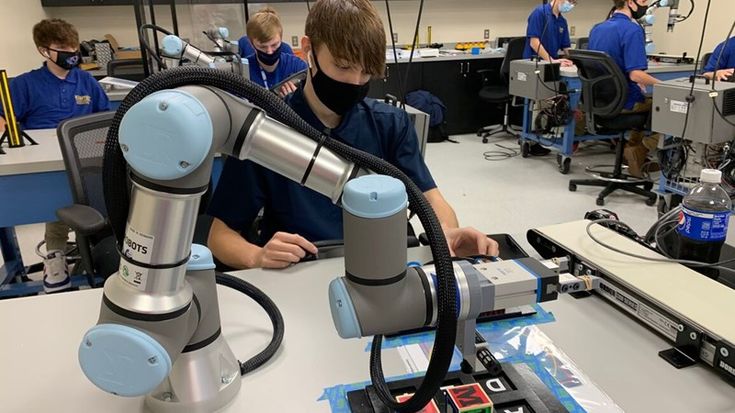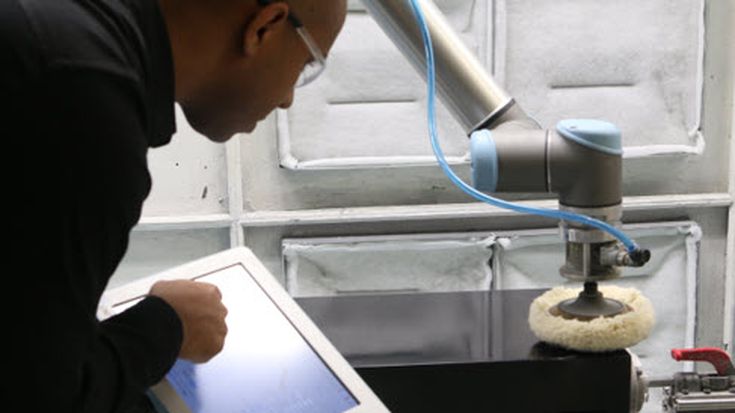
Among the most cutting-edge developments of the 20th century are robotic arms. They are at the heart of the automation revolution. In this article, we will look at the robotic arm mechanism and how a servo motor works for a robotic arm.
A robot is a virtually intelligent agent that can complete tasks robotically with some guidance. A robot is essentially an electro-mechanical device controlled by electronic and computer programming. There are three types of robots: autonomous, semi-autonomous, and remote-controlled.
Robots are best suited to perform dirty, dull and dangerous tasks which humans do not like to do. A robotic arm is a manipulator that mimics the actions of a human arm and is often programmable.
This robotic arm can be controlled and is programmable in nature. Because of how much it resembles a human hand, the robotic arm is frequently referred to as anthropomorphic. Today, all manufacturing-related jobs are completed by humans alone.
A robotic arm, however, may be used for many other operations, including welding, drilling, spraying, and many more. Mechanical and electrical engineering, control theory, computers, and even artificial intelligence are all used in robotics.
An essential goal in the development of robots is to have them interact with their surroundings. This contact is often established using a grasping arm or other end effectors. In the robotic arm, there are several joints in addition to the shoulder, elbow, and wrist, along with the finger joints. These joints are identical to those in a human arm.