

How Physical AI accelerates automation deployment in manufacturing
Physical AI is reshaping how manufacturers deploy automation. By enabling robots to perceive and adapt in real time, it removes the biggest barriers in high‑mix environments, unlocking automation for workflows previously too variable to automate.
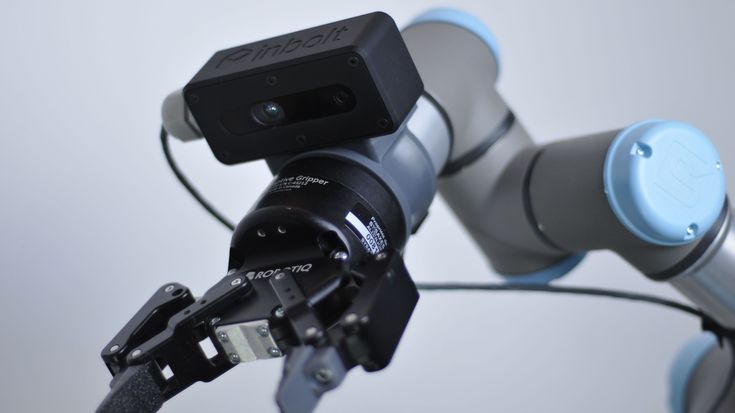
Manufacturers are operating under mounting pressure: labor gaps, product variation and customer expectations around quality continue to rise. In high-mix production, where no two days on the shop floor look the same, traditional automation is reaching its limits.
Robots that rely on fixed, preprogrammed paths struggle in high-mix environments where parts, orientations and workflows constantly shift. Even minor variations in part position can disrupt a fixed robotic path, forcing teams to pause production and adjust programs manually. This adds complexity and slows down automation adoption across new lines or SKUs.
But a new approach is starting to change that trajectory.
Why Physical AI is becoming central to next-gen automation
Physical AI introduces a step‑change in how robots perceive, adapt, and respond to variation. Instead of relying solely on predefined paths, robots can use real‑world input to adjust and maintain performance when conditions change.
For manufacturers, this opens the door to faster deployment, reduced engineering intervention, and the flexibility needed to handle constant variation. Many are already exploring how these solutions can contribute to productivity, uptime, and workflows that were previously deemed too variable to automate.
But how Physical AI gets implemented, and how manufacturers can deploy it reliably, is where the real conversation is happening.
As AI-enabled robotics becomes more capable, leaders are looking for clarity around what it takes to adopt, asking the following questions:
What kind of infrastructure is required to support Physical AI How AI can be integrated without increasing complexity How existing automation investments can evolve rather than be replaced Where the strongest ROI signals are emerging today
What we’ll unpack in the webinar
In our upcoming webinar with NVIDIA, we’ll explore the Physical AI capabilities we enable, while our partners Inbolt and SICK will share how they're advancing sensing and adaptive motion to tackle complex challenges.
Register for our AI webinar February 18 to see how Physical AI can accelerate deployment in real manufacturing environments, and what this means for your operations.
Explore what Physical AI can do for your operations. Physical AI | Universal Robots Cobots

- Universal Robots USA, Inc
- 27175 Haggerty Road, Suite 160
- 48377 Novi, MI