

Humanoids vs. Advanced Robotics: What’s Best for Your Factory?
Manufacturers are facing mounting pressure: labor shortages, skill gaps, and aging workforces, while responding to fast-changing market conditions. In many environments, traditional automation is approaching its limits. What will it take to build a resilient, future-ready industry? Read this blog and download our latest whitepaper to find out.
Answering today’s industry challenges
With the global manufacturing sector facing a declining working-age population and ongoing labor shortages, automation has evolved from a cost-cutting tool into a strategic imperative.
This shift is being fueled by multiple factors: a push to reshore production for greater supply chain resilience, efforts to enhance workplace safety and attract a younger, tech-savvy workforce, and growing pressure to boost productivity, quality, while upholding increasingly demanding sustainability gains.
As these demands grow, so do the technologies that address them. The automation field is broadening — from traditional industrial robots to cutting-edge robotics and emerging humanoids. Navigating this landscape is essential for selecting the right solutions for both current and future manufacturing challenges.
On the brink of a new era
To succeed, manufacturers must grasp how physical AI and advanced robotics are reshaping production.
Our latest whitepaper offers a clear guide — including comparisons of today’s key automation technologies and practical steps to future-proof your operations. Download your copy to discover how to thrive and scale in the next generation of manufacturing.
An expanding automation landscape
As challenges evolve, so does technology. Fueled by breakthroughs in AI and machine learning, alongside rapid advancements in hardware — from sensors and actuators to batteries and embedded systems — robotic platforms are becoming more capable and adaptable than ever.
It's no surprise that these dramatic developments in AI and advanced robotics are capturing the attention of manufacturing leaders. They recognize in it not only a solution to pressing workforce and productivity challenges, but also a strategic path to scalable, long-term success. But what exactly do we mean when we talk about advanced robotics?
Defining advanced robotics
Advanced robots represent the latest evolution in robotic systems, integrating cutting-edge technologies to address increasingly complex challenges across industries.
Today’s advanced robots are defined by three core capabilities:
The ability to autonomously learn and execute complex tasks
The ability to adapt and interact with tools, objects, and environments
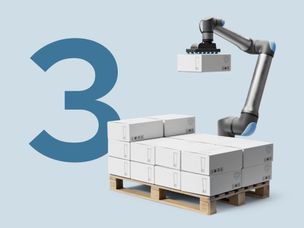
The ability to navigate and operate safely in dynamic, real-world settings
They support a wide range of tasks in manufacturing and logistics environments, offering faster deployment and requiring less physical space than traditional industrial robots. Advanced robotics encompasses several categories, each optimized for different tasks:
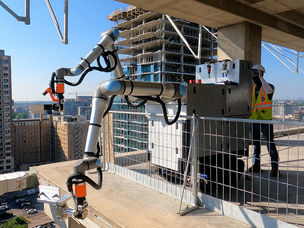
Collaborative robots (cobots)
Available in a variety of sizes and payloads, cobots include features that enable them to be used safely around people after a risk assessment. They are lightweight and can be used in a wide variety of applications.
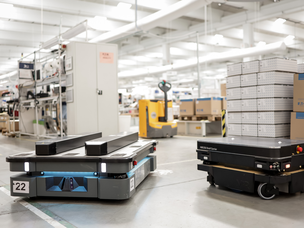
Autonomous mobile robots
Autonomous Mobile Robots (AMRs) are ideal for material handling, using advanced mobility to navigate dynamic environments and transport materials or perform tasks safely and efficiently without human intervention.
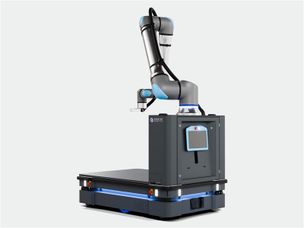
Mobile cobots
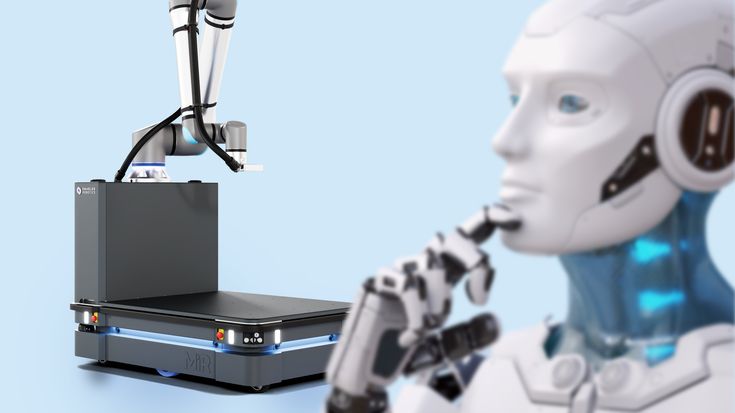
Mobile cobots combine an autonomous mobile robot base with one or more robotic arms, enabling them to support hybrid workers by performing manipulation tasks across dynamic workplaces.
Humanoid robots: promise vs reality
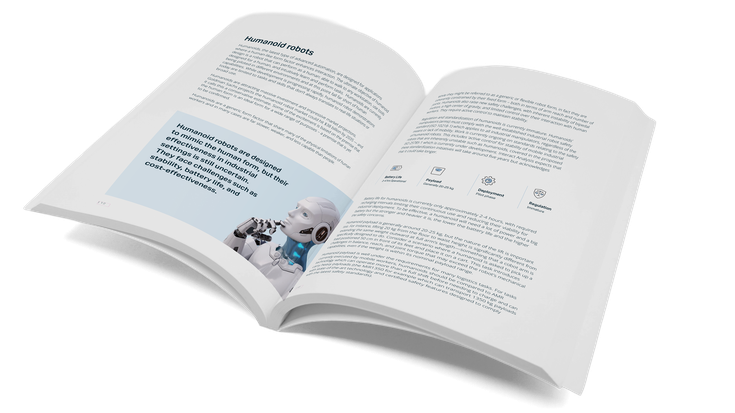
Humanoid robots are emerging as the latest frontier in automation, offering the promise of machines that can move, learn and work like humans. With major investments and market projections soaring — Goldman Sachs forecasts a $38 billion market by 2035 — there's no shortage of enthusiasm.
But beneath the excitement lies a reality check: today's humanoids are still in pilot phases, hindered by short battery life, limited payload capacity, stability issues and immature regulations. While their human-like form is ideal in theory, real-world deployment remains complex and uncertain. For now, their capabilities lag far behind their potential.
What’s more, the eventual deployment of humanoids will be highly determined by environmental considerations. Humanoids may be well suited in the future to unstructured and people-oriented environments but industrial settings such as manufacturing and logistics are a different prospect. Generally, most industrial tasks will be better suited to other forms of advanced robotics.
Traditional industrial robots vs Humanoids vs Advanced Robotics
As robotics advances, three categories are shaping the future: traditional robots, advanced robotics, and humanoids. Traditional industrial robots are proven in structured settings, offering power and precision—but they demand space, programming and safety systems. Humanoids are designed to mimic human abilities but remain early-stage, with high costs and technical hurdles. Advanced robotics, including cobots and AMRs, offer a more adaptable, user-friendly alternative. They integrate easily, work safely with people and suit dynamic environments, striking the right balance for many modern applications.
The smarter path to industrial automation
While humanoid robots capture headlines, the real progress in automation lies in pragmatic, task-focused solutions. For manufacturers and logistics providers facing labor shortages and rising complexity, success doesn’t depend on adopting the flashiest tech—it depends on matching the right tools to the right problems. By leveraging a full spectrum of advanced robotics, from cobots to AMRs, organizations can boost productivity today while laying the groundwork for future innovation. The smartest strategies aren’t built around form—they’re built around function. o learn more about the evolving landscape of robotics explore how function-first robotics can drive real-world results, download the full whitepaper.
Access the whitepaper
Download your whitepaper copy to discover:
- How physical AI, and advanced robotics are transforming production
- Comparisons of traditional robots, cobots, AMRs, mobile cobots and humanoids
- Practical steps to future-proof your manufacturing operations

- Universal Robots USA, Inc
- 27175 Haggerty Road, Suite 160
- 48377 Novi, MI