

Humanoids or purpose-built robots: What manufacturers hear when the hype fades
Humanoids are everywhere right now. For manufacturing leaders already under pressure to improve productivity, the question is unavoidable: is this something we should be planning for?
AI Safety & Compliance Product & Technology Industry Insights
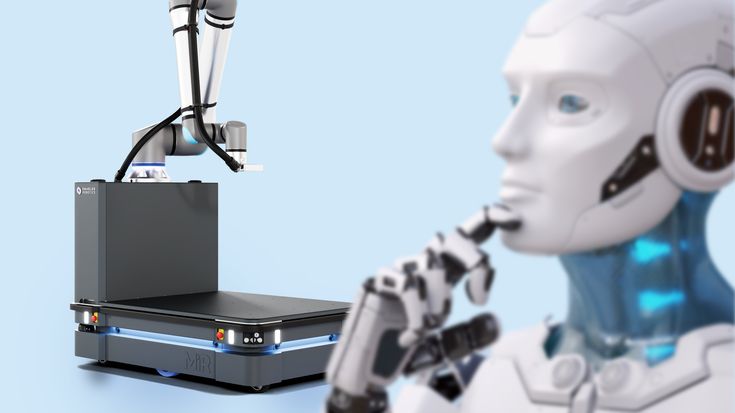
Humanoid robots are everywhere right now. Scroll through LinkedIn and you’ll see a humanoid completing a half marathon, dancing and performing carefully choreographed routines that suggest a leap forward in robotics capability. For manufacturing leaders already under pressure to improve productivity, the question is unavoidable: is this something we should be planning for — or just watching from a distance?
That assessment was at the center of our recent webinar, Humanoids vs Purpose‑Built Robotics: What Manufacturers Actually Need Next. Three experts from different perspectives (research, engineering, and large‑scale manufacturing operations) converged on the same conclusion: industrial readiness has very little to do with spectacle.
The level of engagement during the session reflected how live this issue is. Polls of our audience and the questions that followed revealed real curiosity about what humanoids might contribute to manufacturing but also a sharp focus on what can be deployed, supported, and justified right now.
When a demo isn’t the same as deployment
From a research standpoint, Professor Norbert Krüger, Professor & Chair of Engineering at the University of Southern Denmark emphasized the gap between a compelling demonstration and an industrially viable system.
Producing an impressive video is relatively easy. In a lab environment, robots can be tuned, reset, and retried until a task works once — enough to capture attention. Manufacturing demands something else entirely: performance that holds across thousands of cycles, under variation, without constant human intervention.
Manipulation remains is a clear example of where humanoid technology still has some way to go. Human‑like, five‑fingered hands look intuitively useful, but dexterous grasping at industrial reliability levels is still unsolved. Norbert shared a personal example from a major European research project where, after years of work, a complex robotic hand achieved roughly 50% task reliability. Technically impressive. Operationally unusable.
His skepticism was not dismissive. Progress in locomotion, learning, and perception is real, and investment continues to accelerate. But without robust, repeatable manipulation, broad industrial use of humanoids remains difficult to justify.
Reliability as the real dividing line
That research perspective aligned closely with the engineering view. David Brandt, VP R&D and CTO at Universal Robots, framed the challenge in straightforward terms: complexity multiplies failure modes, and humanoids are among the most complex machines ever built.
In manufacturing, reliability expectations are uncompromising. A system that fails once in a hundred cycles isn’t ‘nearly ready’, it’s non‑deployable. Factory environments demand performance closer to perfect reliability before trust is earned. Anything less becomes downtime, rework, and manual recovery.
Safety compounds the issues with humanoids. Risk assessment in industrial robotics focuses less on how systems work and more on how they fail. For humanoids, size, mass, and dynamic movement introduce failure scenarios — such as loss of balance — that are extremely difficult to mitigate to current safety standards. While work on standards continues, this remains a major barrier to near‑term deployment.
How manufacturing leaders access solutions
Rodrigo DallOglio, President, Operational Excellence and Transformation at Flex, described how his company evaluates automation across its global footprint, where thousands of robots including Universal Robots collaborative industrial robots and MiR AMRs, are already in daily use.
Key evaluation criteria at Flex include safety, return on investment, reliability and quality impact, and traceability. Technologies that perform well across those dimensions get deployed and scaled. Those that don’t, don’t.
Scaling, he emphasized, depends on governance, standardization, and partners capable of supporting repeatable deployment across regions and sites.
Asked how organizations can accelerate automation, his advice was to avoided novelty altogether: fix processes first, standardize what works, invest in change management, and reward deployment. Execution, not experimentation, is what moves the needle.
Where the discussion landed
Despite coming from different disciplines, all three perspectives converged on the same principle: industrial value comes from systems designed around tasks and environments, not around an idealized human form.
Humanoids may play a role in the future as hardware, learning, and interaction mature. But for manufacturers making decisions today, success still hinges on technologies that are safe, reliable, maintainable, and scalable.
The audience engagement — both in polling and discussion — suggests the industry is ready for a more grounded conversation. Less about what looks impressive on video. More about what stands up on the factory floor.
See examples of robots adding value today
Injection molding ROI in 1,500 hours using collaborative robots
Three great questions we didn’t have time for on the day
We received more thoughtful questions than we could cover in the session itself. To continue the conversation, our VP R&D and CTO, David Brandt, agreed to respond to three of them here:
1) Security is increasingly regarded as a key part of readiness in industrial automation — how would you apply this thinking to humanoids?
In industrial automation, security is not an abstract IT concern; it is part of operational resilience. Robots are networked systems that interact with people, production assets, and data, so security has to be designed in from the start — covering software updates, access control, data handling, and system isolation.
We have already seen credible reports of connected robots outside industrial environments being compromised, which reinforces why manufacturers take this seriously. Buyers also need to consider whether they are comfortable with the prospect of their data, including images, being sent to other parts of the world. Trust in the manufacturer should be an important consideration for choosing a robot. For humanoids, the importance of security is amplified by complexity: more sensors, more compute, more connectivity, and more potential attack surfaces. Until security can be demonstrated, validated, and maintained at the same level manufacturers expect from existing industrial automation, it remains a limiting factor. This doesn’t make humanoids impossible, but it does mean that security maturity — not appearance or intelligence — will be a gating requirement for industrial use.
2) What role will regulation have in the future development of humanoid robotics?
Regulation has historically played a constructive role in industrial automation by translating technical risk into clear, enforceable safety requirements that enable broad deployment. Humanoid robots are already covered by existing machinery-safety frameworks, including the EU Machinery Directive and the upcoming Machinery Regulation. These frameworks set baseline expectations around safe power-down, emergency stops, and predictable behavior, regardless of whether a machine has a humanoid form factor.
What is still missing are detailed, application-specific standards that address humanoids’ unique characteristics, particularly around dynamic balance, complex human interaction, and failure modes in unstructured environments. Developing those standards requires stable, repeatable technology and sufficient operational experience. Until then, regulators will rely on general machinery regulation, and manufacturers remain responsible for demonstrating compliance.
In practice, regulation is unlikely to accelerate near-term industrial adoption of humanoid robots. In some cases, current humanoid platforms do not yet appear to meet established industrial safety expectations, as evidenced by public demonstrations where emergency stop or safe shutdown behavior is absent or unclear. For manufacturing environments, adoption will ultimately depend less on regulatory novelty and more on whether humanoid robots can meet the same safety, reliability, and control standards already expected of industrial automation today.
3) Could AI‑generated faces for humanoids change how we view robots and what we regard as socially acceptable?
This is a fascinating topic. AI‑generated faces may influence how people emotionally interpret robots, particularly in social, service, or public-facing environments. Research in human–robot interaction suggests that acceptance tends to be highest when robots use deliberately simplified, clearly non‑human facial expressions - basic visual cues such as eyes or a smile - rather than attempting photorealistic human faces. This approach helps avoid the well-documented “uncanny valley” effect, where near‑human appearance can trigger discomfort or mistrust.
Industrial environments operate under a different set of expectations. On a factory floor, trust is built through predictability, safety, and performance, not emotional signaling or social realism. In this context, adding human-like facial features can complicate perception by creating implicit expectations of understanding, judgement, or adaptability that the system cannot reliably meet.
From an industrial perspective, social realism does not address the core challenges that determine adoption: reliable task execution, safety certification, and consistent behavior under defined operating conditions. While AI‑generated or expressive faces may shape how humanoid robots are discussed or perceived in non‑industrial settings, they do not materially change the criteria manufacturers use when evaluating automation for production environments.

