

Ergonomics, accuracy, and throughput: Why quality teams are turning to cobots
Quality inspection often breaks down due to fatigue and repetition, not lack of standards. Explores how cobots help quality teams improve accuracy, protect inspectors and increase throughput by taking on the most physically demanding inspection tasks.
AI Product & Technology Industry Insights
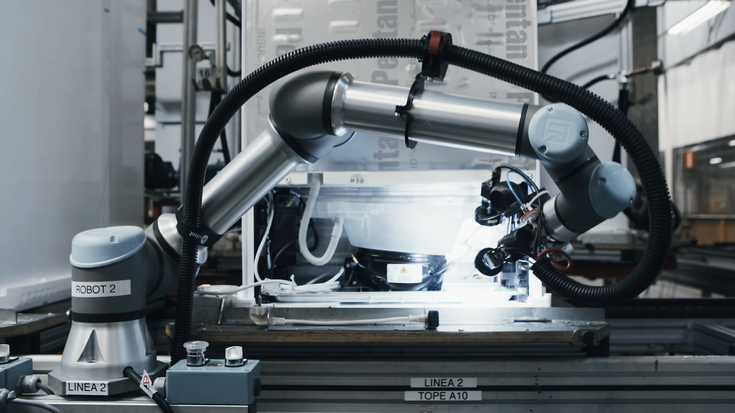
Quality inspection often becomes a silent constraint. Not because standards are weak or tools are missing, but because the work itself is physically demanding and highly repetitive. Inspectors spend hours loading parts into gauges, holding scanners steady, or repeating the same measurements across long shifts. Over time, fatigue sets in. Accuracy becomes harder to maintain, even with experienced staff.
For companies early in their automation journey, this is frequently where collaborative robots enter the picture. Not as a replacement for inspectors, but as a way to make inspection work more stable and sustainable.
Ergonomics is a quality issue, not a comfort issue
Inspection requires precision and focus. When the job involves repetitive motion, awkward reach, or holding tools for long periods, physical strain increases cognitive load. That combination introduces variability.
Cobots change this dynamic by taking on the repetitive and physically demanding elements of inspection. They load and unload equipment, position parts, or hold cameras and scanners in place. Humans remain responsible for interpreting results and making decisions, but they are no longer carrying the physical burden of the process.
The outcome is not just improved comfort. It is more consistent inspection.
Consistency matters, especially early in automation
Robots excel at repeatability. They follow the same path, at the same speed, every cycle. In inspection and metrology, this consistency directly supports measurement accuracy.
For teams new to automation, cobots are often a practical first step. They fit into existing workcells, operate safely alongside people following a risk assessment, and are easier to redeploy than fixed automation. This flexibility matters in high‑mix environments where inspection requirements change frequently.
Rather than redesigning an entire quality process, teams can automate one repetitive task and build confidence from there.
Where cobots are already supporting inspection work
Cobots are commonly used in inspection and metrology tasks across machining, automotive, aerospace, medical device, and general manufacturing environments.
Typical applications include:
- Gauge and vision inspection where consistent positioning enables full inspection instead of sampling
- 3D scanning, where mounting handheld scanners on cobots reduces fatigue, improves repeatability, and protects expensive equipment
- Metrology tending, where cobots load and unload CMMs and similar systems with consistent timing and motion
In suspension manufacturing and other quality‑sensitive operations, introducing cobots into inspection has enabled 100 percent inspection, reduced operator fatigue, and created more predictable quality flows without adding headcount.
Throughput without rushing people
A common concern is that automation pushes inspection to go faster at the expense of care. In practice, cobots often remove that pressure.
By handling repetitive manual tasks, inspection cycles become more stable. Variability caused by fatigue drops. Inspectors are not forced to rush to keep up with production. Throughput increases because the process is steadier, not because people are pushed harder.
Making quality roles easier to sustain
Hiring and retaining skilled quality professionals is increasingly difficult. Roles dominated by repetitive manual measurement are less attractive, particularly to younger engineers.
When cobots handle loading, positioning, or tool holding, quality professionals can focus on analyzing results, managing exceptions, and improving processes. The role becomes more analytical and less physically demanding, which supports retention and knowledge continuity.
When cobots make sense for quality teams
Cobots are not a fit for every inspection task. Integration effort and process clarity still matter. They are most valuable when inspection work is repetitive, physically demanding, and sensitive to variability.
For many quality teams, cobots are not the end goal of automation. They are a practical starting point that improves accuracy, protects people and equipment, and stabilizes throughput.

