

Data security and customer resilience: How Universal Robots builds secure, AI-ready automation
Production environments are increasingly digital, making OT cybersecurity critical. Learn how Universal Robots embeds security by design to protect operations and prepare manufacturers for connected automation.
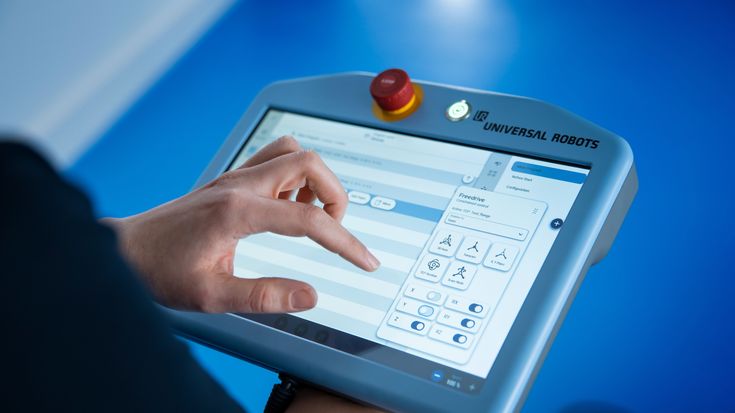
Production environments today rely as heavily on software, networks, and data as they do on mechanical components. This shift unlocks enormous opportunities for productivity and innovation – but it also reshapes the risk landscape. Threat actors who once targeted physical systems increasingly focus on the digital infrastructure that keeps operations running, making cybersecurity a key priority.
When operational technology (OT) is compromised, the consequences can be immediate and costly: unplanned downtime, lost output, reduced product quality, and, in some cases, safety concerns. That’s why Universal Robots has OT secure-by-design as a core principle, embedded into the very foundation of our industrial collaborative robots.
In this article, we outline how we are raising our security bar globally and how we help customers prepare for a future where AI and data driven learning play an essential role in automation.
Why OT security matters more than ever
Manufacturers don’t deploy cobots in isolation. They rely on connected ecosystems where industrial collaborative robots interact with sensors, PLCs, networks, cloud applications, and digital workflows. While this level of connectivity brings powerful gains, it also expands the attack surface.
Across industries, we consistently hear the same message: “We need automation partners who match the security standards we hold ourselves to.”
We agree. Security cannot be an afterthought. It must be part of the design from day one.
Security by design, built into the development lifecycle
Universal Robots made a deliberate choice to treat security as a foundational pillar of product development. This commitment led us to make extensive updates across our engineering processes to ensure they align with established regulatory and industry frameworks worldwide.
Today, we apply security by design across the full lifecycle of our hardware and software, from early concept development to deployment and maintenance.
A key milestone in this journey is our IEC 62443-4-1 Maturity Level 2 certification, demonstrating disciplined and measurable secure development practices. It also positions us strongly for evolving global cybersecurity requirements, including new regulations and customer expectations related to resilience, traceability, and secure component management.
What security by design means in practice
To make security part of everyday engineering, we have reexamined and refined development practices across the lifecycle. This resulted in a structured framework that keeps security visible, actionable, and verifiable.
In practice, this includes:
1. Alignment with leading OT cybersecurity frameworks
We are aligned with the leading OT cybersecurity frameworks, including NIST RMF, and in particular IEC 6244341, ensuring clear expectations around technical controls and development processes.
2. Continuous threat and risk assessment
Threat analysis, monitoring, and supplychain risk evaluation are integrated directly into engineering workflows, helping us identify and mitigate risks early.
3. Strong measures to protect integrity and data
We maintain secure development environments, implement rigorous product integrity protections, and ensure our software and hardware components meet strict security requirements.
4. Transparent documentation and communication
Our approach enables customers to meet their own compliance, auditing, and cybersecurity obligations with confidence. Clarity and openness ensure integration is frictionless and secure.
5. Responsible disclosure and industry collaboration
As a Certified Numbering Authority (CNA) registered with CISA ICS, we uphold responsible vulnerability reporting and disclosure and contribute to strengthening global OT security ecosystems.
These efforts are reflected in our upcoming releases of PolyScope X software platform and in the security capabilities increasingly standard across Universal Robots products.
Our goal: Security, trust, and readiness for what’s next
For Universal Robots, security and AI readiness are not optional addons. They are part of what manufacturers worldwide should be able to depend on when deploying automation in real production environments.
We do not believe that companies should choose between innovation and security. Our mission is to deliver technology that protects operations today, while enabling manufacturers to evolve, adapt, and thrive tomorrow.
If you would like to learn more about PolyScope X or our evolving OT security initiatives, we are ready to support you on the path to secure, scalable, and resilient automation.

- Universal Robots USA, Inc
- 27175 Haggerty Road, Suite 160
- 48377 Novi, MI