

How AI welding automation cuts downtime and defect rates
AI-enabled cobots eliminate programming bottlenecks, automate high-mix production and empower human welders on the factory floor.
Product & Technology Industry Insights
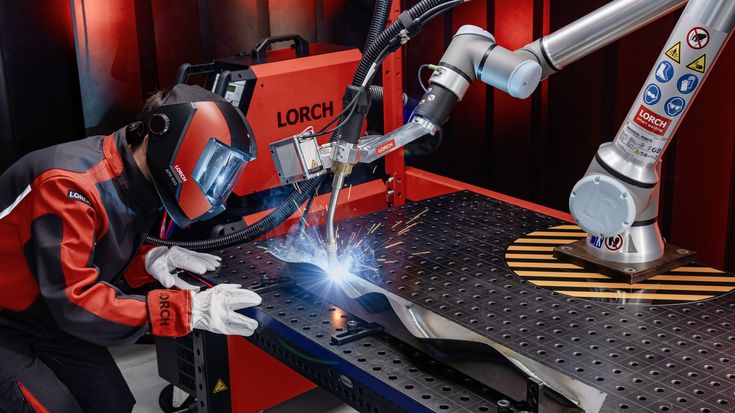
The global manufacturing sector faces a critical labor deficit. The United States lacks hundreds of thousands of skilled welders, with Europe and China reporting similar shortfalls. Production facilities must meet rising demand while managing an aging workforce and a dwindling pipeline of new talent.
Finding skilled welders is difficult enough. Finding personnel who understand both metallurgy and robotic programming is nearly impossible.
For many shops, that reality creates a tough operational bind: output requirements are not slowing down, but the workforce that makes that output possible is increasingly hard to sustain.
In practice, this often means experienced welders are pulled away from welding itself—spending time on setup and programming tasks instead of applying their core expertise on the shop floor.
Why welding automation hasn’t worked for most shops
For years, automated welding was effectively reserved for massive automotive plants or high-volume production lines. Not because smaller shops didn’t see the value—but because the barrier to entry was steep.
Traditional industrial robots typically required:
- dedicated automation engineers
- complex safety infrastructure
- weeks of programming time
For small to medium-sized metal shops, that combination was difficult to justify, especially for small batch runs. In many cases, the setup time outlasted the actual production time.
This made automation impractical for environments where work changes frequently. If every new part requires extensive programming, even a simple job can take longer to prepare than to weld.
So the status quo held: high-volume, static production lines could absorb the overhead. Most other facilities stayed manual.
AI changes the operational reality
Artificial intelligence fundamentally changes this equation.
AI-enabled collaborative robots, or cobots, bring automated welding directly to the shop floor without the programming overhead that historically kept automation out of reach for many operations. The shift here is not simply “more automation.” It’s a change in how quickly and easily welding tasks can be set up and executed.
Instead of requiring detailed programming for every new job, operators can define the task at a higher level, allowing the system to handle much of the underlying complexity.
Caren Dripke, Head of Robotics Development at Lorch Schweißtechnik GmbH, compares AI-enabled welding cobots to an experienced apprentice. The machine is not showing up for its first day on the job. The system has already seen a variety of tasks, requiring the operator only to point out the general job description while the AI figures out the rest.
This changes what’s required to get started. Where traditional automation demanded deep programming expertise, AI-enabled systems reduce that dependency—making it easier for existing teams to adopt and use automation effectively.
A force multiplier, not a replacement
In a labor-constrained environment, it’s understandable that automation can raise questions about workforce impact. But the most important point in this shift is not replacement—it’s leverage.
Instead of replacing human workers, these systems act as force multipliers. They handle the physically repetitive elements of the task, enabling human welders to focus on core skills, material behavior, and quality assurance.
For example, rather than spending time repeatedly setting up similar weld paths, skilled welders can focus on ensuring the weld meets quality standards and responds correctly to variations in material or fit-up. The repetitive aspects are handled by the system, while judgment and expertise remain with the operator.
This is particularly important in environments where experienced welders are in short supply. Their time becomes more valuable when it is applied to decision-making and quality—not consumed by repetitive setup work.
What this enables for real operations
When programming and setup overhead are reduced, welding automation becomes relevant to a wider range of facilities—not just the largest, most standardized production environments.
Historically, small-batch work struggled to justify automation because the time investment required to program and prepare a traditional robot could exceed the time needed to weld the parts manually.
With AI-enabled welding cobots, that balance begins to shift. Tasks that once required significant upfront preparation can be started more quickly, making automation more viable in environments with frequent changeovers or varied workpieces.
This opens the door for more shops to apply automation where it previously did not make operational sense—not by changing the nature of the work, but by reducing the time and expertise required to get started.
The human role becomes more important
Even in a world where AI reduces programming requirements, welding remains a craft. Material behavior, weld quality, and judgment under real-world variability are not optional. They are the foundation of successful welding operations.
The value of AI-enabled cobots is that they help address the parts of the job that can become the limiting factor—especially as the labor gap grows.
By reducing programming overhead and taking on physically repetitive work, these systems help keep output moving while allowing skilled welders to do what they do best: apply expertise, manage quality, and respond to the realities of the material and the job.
Keep exploring welding automation

